

- Monterey Car Week runs 13 to 15 August 2026, with RM Sotheby’s, Gooding Christie’s, Bonhams, Broad Arrow and Mecum all selling.
- Bonhams moves to the Rolex Monterey Motorsports Reunion for its inaugural Laguna Seca auction on 13 August.
- Historic competition cars carry the top estimates: a Shelby Daytona Coupe in excess of USD 25 million, a McLaren F1 GTR above USD 35 million.
- Modern hypercars tell the opposite story. A Chiron Super Sport sold new at roughly USD 3.75 million is estimated at USD 3.0 to 3.5 million.
The collector car market’s biggest week opens on 13 August, and the catalogues describe a market splitting in two. At one end, historic competition cars with unrepeatable provenance are carrying estimates that would have looked implausible three years ago. At the other, recent limited-production hypercars are being offered below what their first owners paid. Both are happening in the same tents, in the same week, to the same buyers. Here is what is crossing the block, what the estimates reveal, and why the two ends of this market have stopped moving together.
What Is Selling This Week
Five houses are active: RM Sotheby’s at the Monterey Conference Center, Gooding Christie’s at Pebble Beach, Broad Arrow, Mecum, and Bonhams at its new Laguna Seca venue alongside the Rolex Monterey Motorsports Reunion on 13 August.
The lots drawing attention sit at the historic end.
- Shelby Daytona Coupe, chassis CSX2300. One of six built to beat Ferrari’s 250 GTO, campaigned on the 1964 Tour de France and through Shelby American’s championship-winning 1965 FIA GT season, and the only Daytona Coupe Shelby personally owned. Estimate in excess of USD 25 million.
- McLaren F1 GTR, 1996. Value in excess of USD 35 million.
- Ferrari 250 P, chassis 0810. The first mid-engine V12 sports-racing prototype Ferrari built, and the car that redirected the marque’s racing programme.
- The Driver’s Philosophy Collection. Seventeen cars assembled by Vince Zampella, co-founder of Infinity Ward and founder of Respawn Entertainment, offered by RM Sotheby’s with a combined estimate near USD 47 million.

Why Are Modern Hypercars Softening?
Because scarcity by production run is not the same thing as scarcity by survival.
A Chiron Super Sport is rare in the sense that Bugatti built few of them. A Shelby Daytona Coupe is rare in the sense that six were made sixty years ago, they were raced, and one of them cannot be recreated. The first kind of rarity is a manufacturing decision. The second is a historical accident, and no amount of capital reproduces it.
Three mechanics compound the effect:
- Supply arrives all at once. A limited run of 99 or 500 cars enters the market over two or three years, then those owners begin selling into each other. Historic cars trickle out over decades.
- Successors are announced. Every new flagship implicitly reprices the one before it. A historic racer has no successor.
- Condition is a cost, not a story. Delivery mileage is the value proposition on a modern hypercar, which means using it destroys the thesis. Race history is the value proposition on a historic car, which means it was used and that is the point.
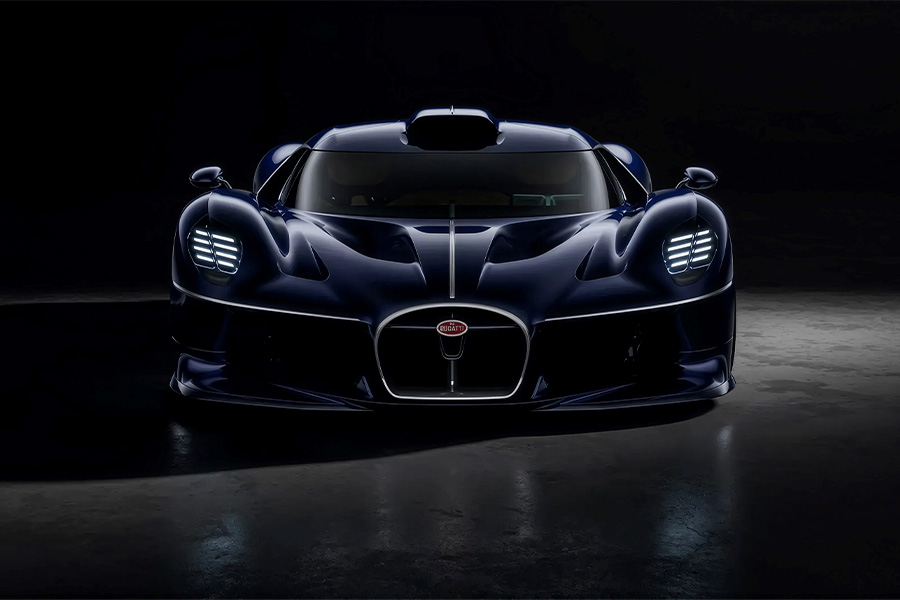
The Bugatti Mistral is the interesting test case: 99 built, the last open-top car to use the Piech-era quad-turbocharged W16 before that architecture retires permanently. Being the final example of a discontinued engineering era is closer to historical scarcity than to a production run, and it is the argument for why some modern cars will hold.
Where the Records Are Being Set
The benchmark this year came in April, when RM Sotheby’s Monaco sale achieved EUR 16,655,000, around USD 19.5 million, for a 1961 Ferrari 250 GT SWB California Spider by Scaglietti, a world record for the model. That car was the show vehicle at the 1961 Frankfurt Motor Show, carried Ferrari Classiche certification and had undergone a three-year refurbishment.
The Enzo provides the modern comparison and it cuts both ways. A 2003 example with 649 miles reached USD 17.875 million at Mecum Kissimmee in January, and a one-of-one Rosso Dino car closed at USD 13,018,950 online in June, the most expensive car ever sold on an online platform. Twenty-three years on, the Enzo has crossed from modern hypercar into collectible, which is the transition the Chiron has not yet made.
The wider collectible dynamic, and how it connects to the broader auction rebound, sits in our read on the art market’s first-half recovery, where luxury collectibles including cars now form the second-largest revenue stream at the major houses.
Bottom Line
Monterey Car Week 2026 runs from 13 to 15 August with five houses selling and Bonhams opening a new venue at Laguna Seca. The headline estimates belong to historic competition cars, a Shelby Daytona Coupe above USD 25 million and a McLaren F1 GTR above USD 35 million, while a 2024 Chiron Super Sport is estimated below the USD 3.75 million its owner paid. That divergence is the story of the week and probably of the decade: the collector market is separating irreplaceable provenance from limited production, and it is pricing them completely differently. For anyone buying into the modern end, the useful question is what makes this particular car impossible to replicate, and if the only answer is the production number, that is not enough.
FAQ
When is Monterey Car Week 2026?
It runs from 13 to 15 August 2026 across venues in and around Pebble Beach and Monterey, California. The auctions are held by RM Sotheby’s, Gooding Christie’s, Bonhams, Broad Arrow and Mecum, with Bonhams holding its inaugural sale at Laguna Seca on 13 August alongside the Rolex Monterey Motorsports Reunion.
Why are historic racing cars worth more than modern hypercars?
Because their scarcity cannot be reproduced. A limited-production hypercar is rare because a manufacturer chose a number, and that manufacturer can make a similar choice again next year. A car with documented race history, a small original production run and sixty years of survival attrition represents a supply that is fixed permanently.
Do modern hypercars always depreciate?
No, but the pattern is common in the years immediately after delivery, when the original allocation reaches the secondary market and a successor model is announced. Cars that mark the end of a technical era, hold genuine one-of-one specification or acquire competition history tend to recover and appreciate, typically after a decade or more.
What does matching numbers mean?
It indicates that a car retains its original engine, gearbox and major components as delivered from the factory, verified against build records. For historic cars it is one of the most significant value determinants, and a chassis fitted with a replacement engine can trade at a substantial discount to an otherwise identical matching-numbers example.