

Rare Hilma af Klint Painting Heads to Auction With an $800,000 Estimate
Some paintings change hands often. Others surface only once in a generation. This November, a rare canvas by Swedish visionary Hilma af Klint will step into the auction spotlight. It offers collectors a chance to own a work by one of the true pioneers of abstract art.
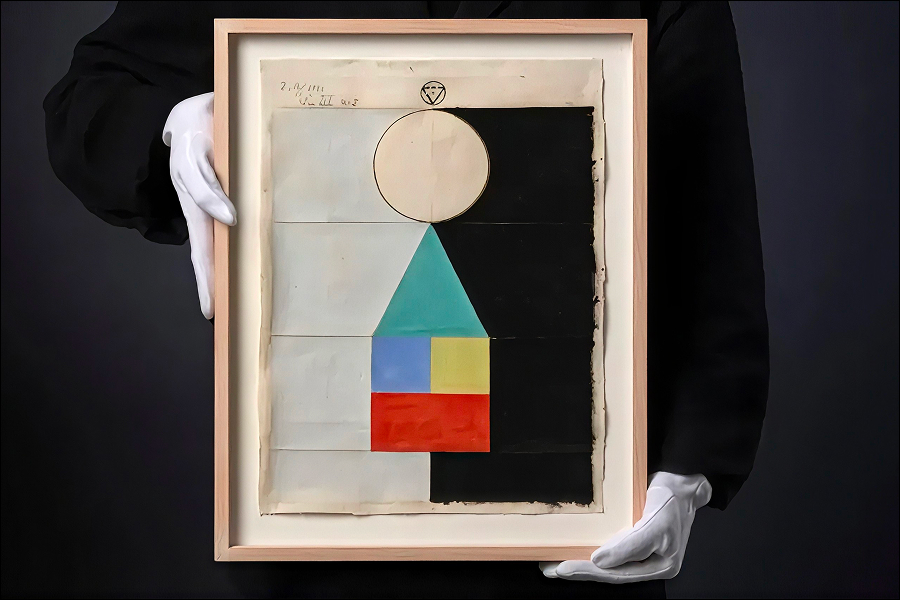
The painting, Ser III No. 5, was created in 1920. Swedish auction house Bukowskis will offer it during its Modern Art and Design sale in Stockholm on November 19, 2026. The estimate ranges from $600,000 to $800,000. For Ultra High Net Worth collectors who value provenance, historical weight and the legacy of pioneering artists, this is a moment worth marking.
The sale also holds a special place in the artist’s market history. According to Bukowskis, Ser III No. 5 is expected to be only the third af Klint painting ever offered at public auction. The two earlier sales took place more than thirty years ago. Few artists of her stature have so thin a public record. That scarcity makes this auction a rare window into how today’s collectors value an artist whose influence has been confirmed by major museum shows, deep scholarship and institutional acquisitions.
Hilma af Klint and the Origins of Abstract Art
Hilma af Klint holds a singular place in the story of modern art. Born in Sweden in 1862, she built a visual language drawn from spirituality, mathematics, nature and the search for unseen dimensions. Her practice wove together geometric structures, symbolic color, botanical motifs and layered compositions. In time, this work would help reshape how we understand the birth of abstraction in the twentieth century.
Circles, spirals, pyramids and organic forms move through her canvases. Each one explores the meeting point between the physical world and spiritual awareness. These shapes do not dictate meaning. Instead, they invite reflection and personal reading. They became the signature of her art, and they continue to inspire artists, curators and collectors drawn to the bond between abstraction, philosophy and perception.
Her global recognition reached a turning point in 2018. That year, the Solomon R. Guggenheim Museum in New York staged Hilma af Klint: Paintings for the Future. The exhibition carried her work to a vast new audience. It also prompted a fresh look at her role in modern abstraction, placing her vision firmly within the movements that shaped twentieth-century painting.
Her institutional presence has only grown since. A presentation at the Grand Palais in Paris in 2026 added another chapter. Each milestone has deepened her standing among museum professionals, art historians and private collectors who seek works that capture pivotal moments in modern art.
Ser III No. 5: A Rare Painting From 1920
Ser III No. 5 was born during a remarkable burst of creative energy. In 1920, over roughly three months, af Klint completed a group of 85 paintings. This painting belongs to that series. The pace alone speaks to the intensity of her vision and her devotion to a symbolic language of color, form and careful structure.
The work has rested in the same private collection since 1995. That gives it more than three decades of documented ownership. According to Bukowskis, the current owner acquired it after the Hilma af Klint Foundation released a limited number of paintings in the early 1990s. That rare event placed only a small selection of her works into private hands.
For discerning collectors, this provenance matters deeply. Continuity, authenticity and a clear ownership record are the quiet foundations of a meaningful acquisition. The painting’s link to her prolific 1920 period also ties it directly to the growth of her artistic philosophy and the evolution of her visual vocabulary.
The $600,000 to $800,000 estimate sets a vital benchmark in a market with so few public sales. A result within this range would mark a new auction record for the artist. It would reflect her rising institutional stature and give one private collector the chance to become a steward of her legacy.
The Growing Influence of Ultra High Net Worth Collectors in the Art Market
This auction arrives in a collecting world shaped by the resources and passions of Ultra High Net Worth Individuals. For The 1%, acquiring historically significant art is rarely about ownership alone. It can express identity, intellectual curiosity and a commitment to carrying creative achievement forward for future generations.
The numbers tell a striking story. According to Altrata’s World Ultra Wealth Report 2025:
- The global population of individuals with a net worth above $30 million reached about 510,810 in June 2025.
- Together, they controlled an estimated $59.8 trillion in wealth.
- This group makes up roughly 1.1% of the world’s high net worth population, yet holds 32.4% of its total wealth.
This concentration of resources defines who can take part in the market for exceptional works. It also fuels cultural institutions, private museums and philanthropic efforts devoted to preserving art. Altrata projects the global Ultra High Net Worth population could climb to about 676,970 individuals by 2030. That means a widening circle of potential patrons, collectors and benefactors.
The broader market adds further perspective. According to the Art Basel and UBS Global Art Market Report 2025, global art and antiques sales reached roughly $57.5 billion in 2024. That activity spans auction houses, galleries and private sales. Within this vast landscape, works by historically important artists hold a distinct place, shaped by cultural relevance, institutional recognition and established provenance.
For collectors of abstract art, af Klint is a figure of rare importance. Her work unites artistic innovation with philosophical inquiry. Because her paintings so seldom appear, each public offering draws close attention from individuals and institutions eager to understand and preserve her contribution.
Institutional Recognition and the Preservation of Hilma af Klint's Legacy
Af Klint’s legacy has become a central subject in museum circles worldwide. The Hilma af Klint Foundation has played a key role in that story. It has protected her artistic heritage and guided how her paintings reach audiences around the globe.
The foundation’s careful stewardship helps explain why her market looks so unusual. Much of the public’s access to her work has come through exhibitions and institutional collections. In 2021, the Glenstone Museum in Maryland acquired her Tree of Knowledge series after it was shown at David Zwirner Gallery. The purchase signaled how keenly leading institutions want to secure major examples of her art.
For The 1%, institutional recognition is a meaningful guide. Museum exhibitions, scholarly publications, solid provenance and curatorial insight all help define an artist’s significance. Together, they give collectors a lens through which to see the historical and intellectual depth of an acquisition.
Her legacy also reveals the growing link between private collecting and cultural philanthropy. More and more, wealthy individuals help preserve and present great artistic achievements. Through private foundations, museum patronage and thoughtful long-term collection planning, collectors can expand access to important works and support their continued study.
A Defining Auction Moment for The 1%
The November sale of Ser III No. 5 is a notable event for collectors of abstract art. It brings together historical importance, documented provenance and extraordinary rarity. Its presentation at Bukowskis also offers a chance to watch af Klint’s standing evolve in the international market, and to see how her vision continues to shape collecting today.
For Ultra High Net Worth Individuals, the painting carries a story rooted in innovation, spiritual exploration and the rise of modern abstraction. Its 1920 origins tie it to a defining chapter in her career. Its private ownership since 1995 adds another layer to its history.
The auction also highlights the role collectors play in shaping artistic heritage, especially when important works emerge after long years in private hands. To acquire a painting by Hilma af Klint is to take part in preserving a legacy that still guides museum exhibitions, scholarship and the appreciation of abstract art.
As Bukowskis prepares to present Ser III No. 5 on November 19, 2026, eyes around the world will turn to Stockholm. A rare creation by one of modern abstraction’s founding figures awaits its next guardian. For The 1%, the evening will honor the enduring value of art, the quiet power of provenance and the lasting reach of artists whose visions continue to inspire each new generation of collectors.
Share Now
LATEST
POPULAR