

A Cold Jewel of Imperial Russia: Fabergé’s Winter Egg Set to Break Records
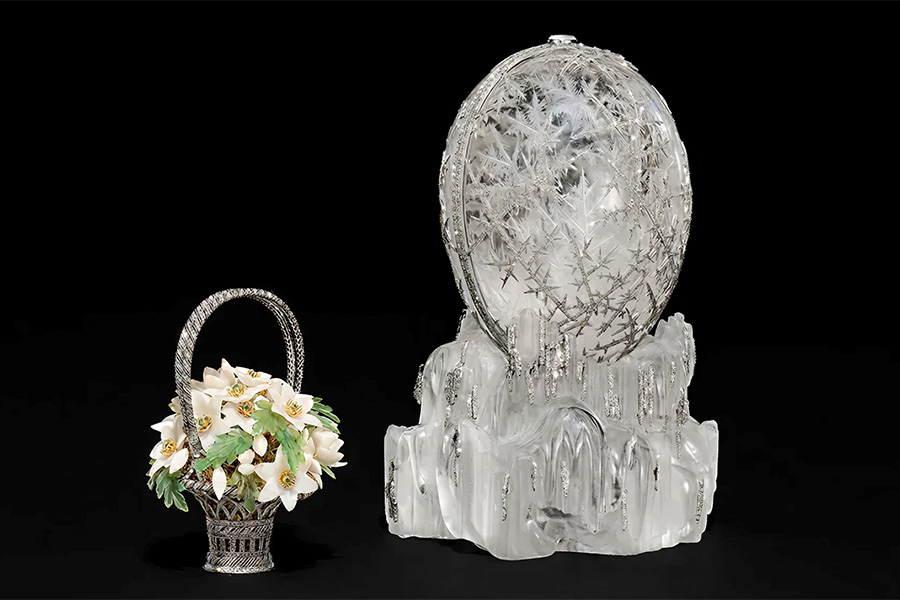
In the rarefied world of imperial craftsmanship and collectible objets d’art, few creations command awe like the legendary Fabergé eggs. This December, at Christie’s London, the celebrated Winter Egg—a singular masterpiece originally commissioned in 1913 by Tsar Nicholas II—will go under the hammer once again. Experts anticipate it could fetch more than $27 million, positioning it to become the most expensive Fabergé ever sold.
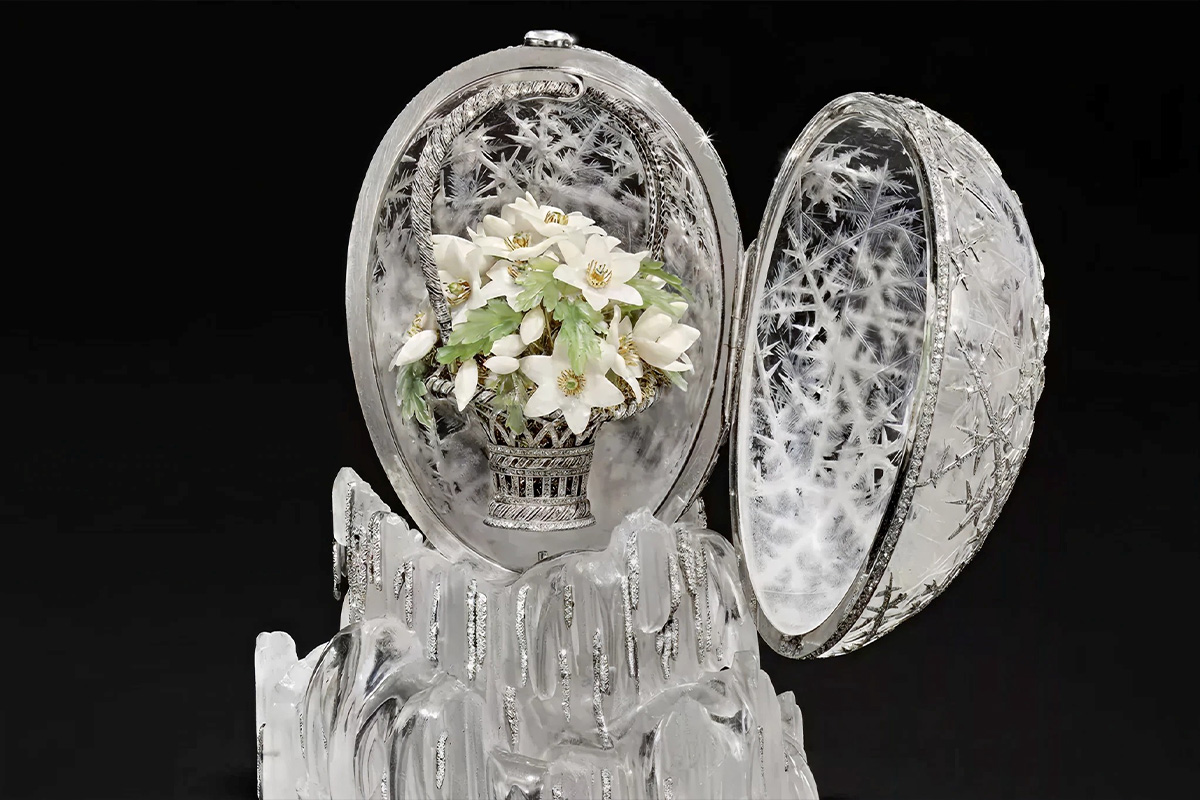
For the ultra elite, where legacy, rarity, and aesthetic excellence converge, this is more than an auction—it is an invitation to own a historical jewel of immeasurable cultural value.
A Work of Precision, Poetry, and Power
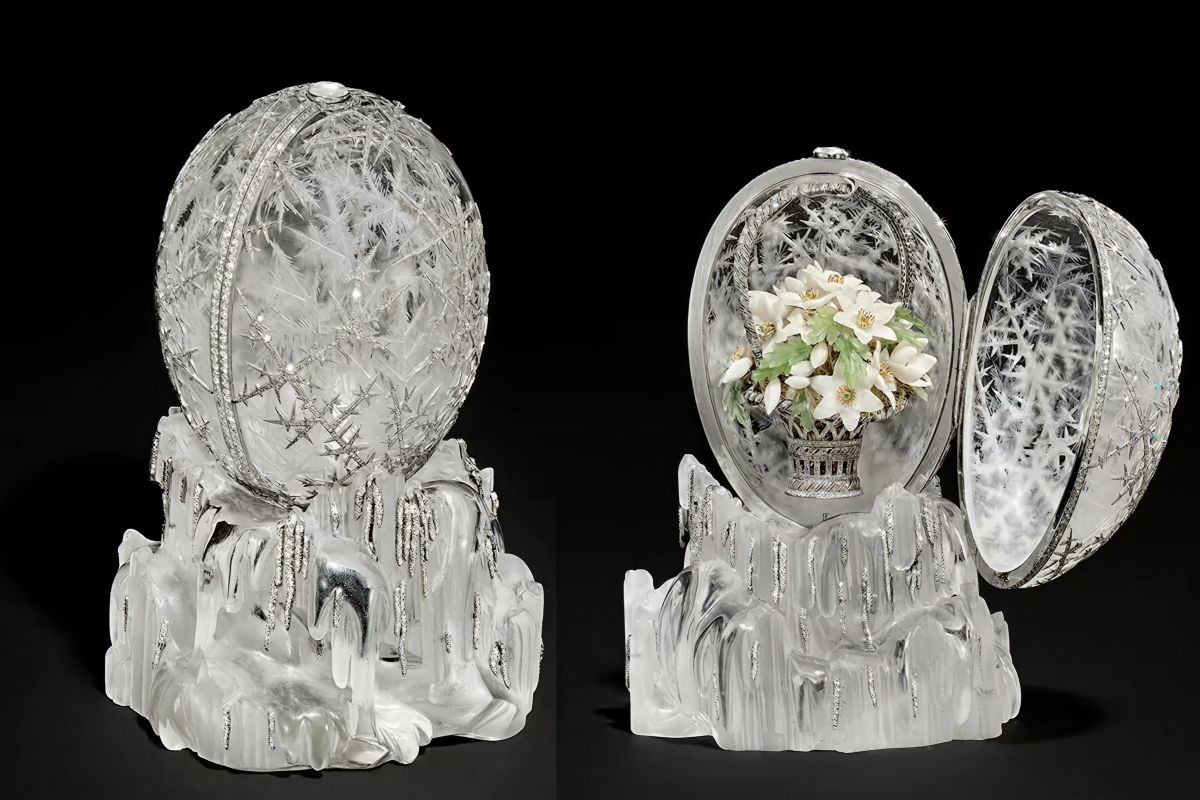
The Winter Egg was created as a gift for the Dowager Empress Maria Feodorovna and designed by Alma Theresia Pihl, one of Fabergé’s most revered female artisans. Crafted from rock crystal and platinum and adorned with hundreds of diamonds, its icy elegance mimics the fleeting beauty of winter. At its heart lies a hand-carved bouquet of quartz anemones nestled in a trellis basket, a microcosm of Russia’s storied imperial past captured in precious metal and stone.
In many ways, the Winter Egg resonates with the values today’s most discerning collectors prize: meticulous detail, refined symbolism, and absolute scarcity. Of the 50 Imperial Easter Eggs crafted for the Romanovs, only seven remain in private hands. The Winter Egg, one of the most intricate, is considered a crown jewel among them.
A Market for the Truly Elite
With such rarity and prestige, it’s no surprise that Fabergé eggs command staggering prices at auctions and private sales. In fact, in 2014, the Winter Egg was sold for a record-breaking $30 million to an anonymous collector.
But the market for these treasures goes far beyond monetary value. For many collectors, owning a Fabergé egg represents membership in an elite club of connoisseurs who appreciate the rich history and craftsmanship behind each piece.
A Legacy of Imperial Splendor
The Fabergé brand has become synonymous with luxury and opulence, thanks to its origins as purveyor to the Russian imperial family. But beyond its association with royalty, Fabergé’s
According to the latest Art Basel and UBS Survey of Global Collecting, ultra high net worth individuals (UHNWIs) with assets exceeding $50 million now allocate an average of 28% of their wealth to art and collectibles. This marks a steep rise from prior years and signals a definitive shift in portfolio strategy—where cultural capital holds as much weight as financial return.
Digital art and design objects have grown in popularity among younger UHNW collectors, particularly Millennials and Gen Z. However, there remains a steadfast allure to museum-quality historical pieces like Fabergé’s creations. With heritage houses like Christie’s spotlighting increasingly rare items, acquisition becomes an act of legacy building as much as of aesthetic appreciation.
The Winter Egg’s previous sale in 2002 set a record at $9.6 million. With inflation, the rise of alternative investment strategies, and the deepening appetite for tangible cultural assets, this December’s sale could reset the global benchmark for collectible decorative arts.
Aesthetic Power Beyond Genre
While the Winter Egg is a masterpiece of representational art, its delicate interlacing of textures, shapes, and finishes evokes the spirit of abstract art—albeit in three dimensions. For collectors with a sophisticated visual vocabulary, the egg’s composition invites not just admiration but interpretation. The abstraction lies in its metaphors: time frozen, beauty suspended, empire encapsulated.
This transcends art as décor. For the 1%, it represents alignment with a narrative of beauty, impermanence, and legacy. These are not mere acquisitions; they are statements of taste and testaments to permanence in an otherwise ephemeral world.
Final Thoughts: Owning Eternity
With more UHNW collectors seeking works that reflect personal meaning and enduring artistry, the Winter Egg stands as a paragon of both. It is as much a physical object as it is a cultural artifact—a convergence of dynastic history, feminine genius, and fine jewelry.
Whether nestled within a private gallery or set beside a contemporary collection of abstract art, this egg will resonate with the kind of silence only true rarity commands. And in December, one member of the 1% will walk away with more than an artwork—they will carry a piece of history into the future.
Share Now
LATEST
POPULAR