

LVMH Reshapes Leadership at Givenchy and Dior as Luxury Fashion Brands Enter a New Growth Cycle
As Luxury Fashion Brands recalibrate for a post-slowdown era, leadership has once again emerged as a decisive lever of value.
LVMH has confirmed a new executive configuration at two of its most strategically important houses, signaling a sharpened focus on long-term brand equity, retail excellence, and disciplined growth.
Amandine Ohayon has been appointed Chief Executive Officer of Givenchy, while Alessandro Valenti takes on the role of Deputy Managing Director of Retail at Christian Dior Couture. The appointments come at a moment when Ultra High Net Worth Individuals remain the primary stabilizing force in the global luxury economy, even as aspirational demand continues to soften.
According to Wealth-X, UHNWIs represent less than 1 percent of the population but account for over 40 percent of global luxury spending. For groups such as LVMH, aligning leadership with this reality is no longer optional. It is structural.
A new chapter for Givenchy
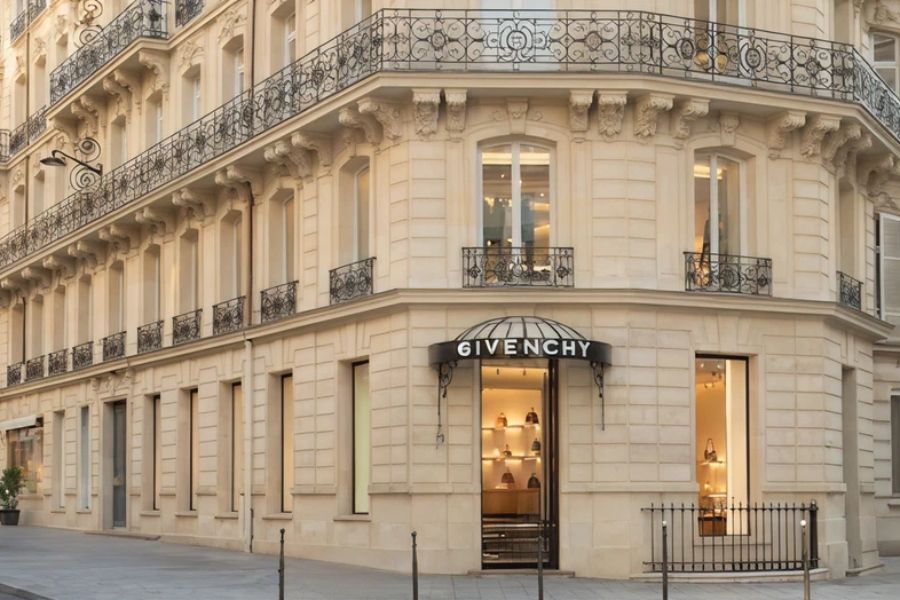
At Givenchy, Amandine Ohayon assumes leadership with a mandate that extends beyond operational management. Her appointment reflects LVMH’s intent to reposition the house within the upper tier of Luxury Fashion Brands, where creative clarity and commercial rigor must coexist.
Ohayon brings a profile shaped by both fashion and beauty, two sectors increasingly converging within the luxury ecosystem. Her career has spanned senior roles at LVMH, L’Oréal, and more recently Stella McCartney, where she navigated the complexities of modern brand stewardship, sustainability narratives, and global retail performance.
Her arrival coincides with the creative direction of Sarah Burton, whose appointment in 2024 marked a return to couture intelligence and craftsmanship-driven storytelling. Together, their partnership is expected to strengthen Givenchy’s relevance among UHNW clients who prioritize heritage, discretion, and intellectual design over volume-driven visibility.
Industry data supports this strategy. Bain and Altagamma estimate that while the personal luxury market remains broadly flat, spending by the ultra-wealthy continues to grow in high-value categories, particularly couture-adjacent ready-to-wear, leather goods, and bespoke experiences. Givenchy’s challenge is not demand, but precision.
Dior reinforces retail and digital power
At Christian Dior Couture, Alessandro Valenti’s move into a senior retail leadership role underscores the increasing importance of execution at scale. With Dior positioned as one of the most profitable Luxury Fashion Brands globally, the next phase of growth lies in refining client experience across physical and digital touchpoints.
Valenti’s background at Louis Vuitton and Givenchy has been deeply rooted in regional performance, retail discipline, and organizational transformation. His appointment follows the arrival of Jonathan Anderson as artistic director, a creative shift that places heightened demands on retail agility and storytelling consistency.
For Ultra High Net Worth Individuals, Dior is not simply a fashion house. It is an ecosystem spanning couture, leather goods, fine jewelry, and experiential hospitality. Knight Frank reports that UHNW clients increasingly expect seamless brand continuity across cities, channels, and private client services. Retail leadership, therefore, becomes a strategic function rather than a commercial one.
Leadership as a luxury asset
These appointments reflect a broader truth shaping Luxury Fashion Brands in 2026. Growth is no longer driven by geographic expansion alone, but by leadership capable of aligning creativity, operations, and cultural relevance.
LVMH’s internal mobility strategy also reinforces continuity. By promoting executives with deep institutional knowledge, the group protects brand DNA while adapting to evolving consumption patterns. This is particularly critical as UHNWIs increasingly favor brands that demonstrate stability, long-term vision, and restraint.
According to Morgan Stanley, the next phase of luxury growth will be defined by fewer but more meaningful client relationships. Leadership decisions, therefore, resonate far beyond boardrooms. They influence trust, perception, and ultimately capital allocation among the world’s most influential consumers.
As Givenchy and Dior move into their next chapters, LVMH is making a clear statement. In the era of the 1 percent, leadership is not about disruption for its own sake. It is about stewardship, precision, and the quiet authority that defines the world’s most enduring Luxury Fashion Brands.
Share Now
LATEST
POPULAR