

Portraits of Legacy: George Washington Returns to the Block as America Turns 250
On February 1, the 68th Grammy Awards will light up Los Angeles at the Crypto.com Arena, bringing together music, celebrity, and global influence. But this year, the spotlight extends beyond the stage. Fine wine and spirits are claiming a stronger role in modern luxury culture, and Patrón is stepping into history as the Grammy Awards’ first official tequila supplier.
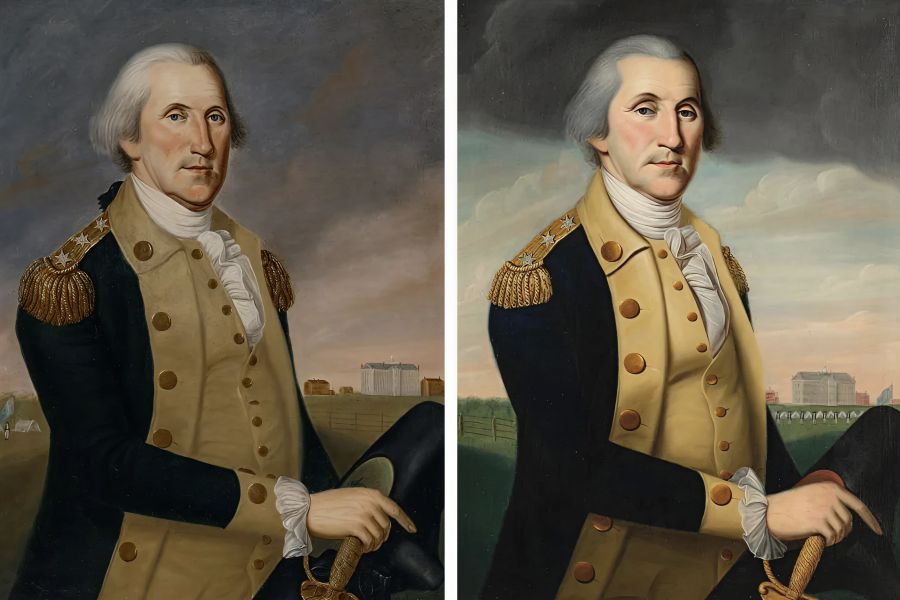
Charles Peale Polk, the nephew of the famed artist Charles Willson Peale, created more than 50 renditions of the nation’s founding father. This month, two of his rarest works are set to go under the hammer at Christie’s and Sotheby’s in New York, just one day apart.
These nearly identical paintings, produced in the early 1790s, capture Washington in uniform before Nassau Hall in Princeton, a symbolic nod to his military leadership following the pivotal 1777 battle. More than portraits, these works are testaments to the nation’s early visual identity—icons of patriotism and prestige that now intersect with a new form of status: historical investment.
For the One Percent, A Moment of Cultural Stewardship
For UHNW collectors, moments like these represent more than the acquisition of art—they’re opportunities to shape cultural legacy. With global art market sales totaling just over $67.8 billion in 2024, the highest echelons of wealth are increasingly turning toward historically significant assets rather than speculative contemporary pieces. While more than 50 percent of lots sold at auction last year resulted in negative returns, works with narrative weight and museum-grade provenance remain a favored category among connoisseurs seeking meaning beyond metrics.
This reemergence of heritage collecting comes amid growing interest from a younger generation of collectors. According to the 2025 Art Basel & UBS Art Market Report, nearly one-third of new collectors under 40 now prefer tangible, historically significant objects to contemporary or conceptual works. These figures echo broader market signals from the top 0.01 percent: collectability is no longer about flash, but about permanence.
A White House Provenance, A Presidential Canvas
Christie’s will offer one of Polk’s finest known versions on January 23. Estimated between $200,000 and $300,000, the portrait carries a rich provenance, having adorned the White House walls from 1962 to 1992 at the request of First Lady Jacqueline Kennedy. The painting served as a daily reminder of American ideals for generations of leaders and visitors. It has never been auctioned before.
Just a day later, Sotheby’s will present a sister version that last sold in 2010 for $458,500. Estimated in the same range of $400,000 to $600,000, this iteration has already passed through notable private collections and public exhibitions. Both pieces originally circulated through Hirschl & Adler Galleries, long revered for their role in safeguarding American heritage.
Washington, Wealth, and the Rise of Intellectual Prestige
In the world of high-value collecting, American historical portraiture occupies a unique niche—especially in a geopolitical moment where national symbolism is being reexamined. These portraits are not merely decorative. For the culturally fluent collector, they represent influence, refinement, and perhaps most critically, stewardship.
The integration of such works into a private collection does more than enrich a room. It signals the collector’s alignment with values of legacy, governance, and continuity. Much like acquiring rare timepieces or first-edition texts, the appeal lies in resonance rather than return. Yet even in this space, strategic acquisition still plays a role.
While the market for blue-chip abstract art remains stable, its emotional distance contrasts sharply with the immediacy of a founding father’s gaze. A Polk Washington may not echo the gestural dynamism of a de Kooning or a Richter, but for the one percent, it offers something rarer: narrative gravitas.
Who Will Own the Story?
Will these portraits return to public institutions, or will they join the salons and studies of billionaire patrons like Ken Griffin or David Rubenstein? The latter possibility is far from remote. As generational wealth continues to expand—driven by technology, finance, and inheritance—so too does the appetite for cultural capital.
In a world where status is increasingly intangible, art remains a visible assertion of knowledge and taste. And as the 250th anniversary of the United States unfolds, the most powerful individuals on the planet may find themselves drawn not only to the symbols of history, but to its possession.
Share Now
LATEST
POPULAR
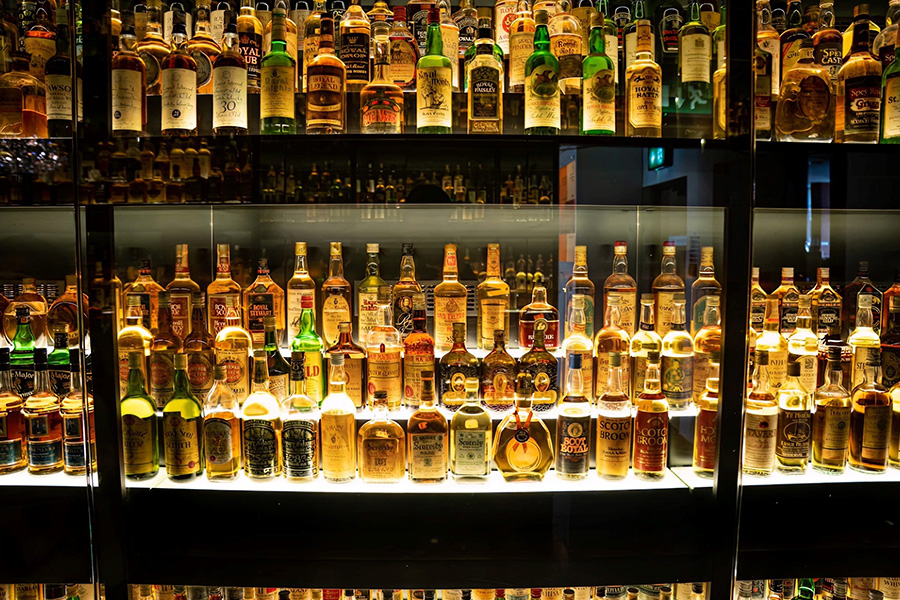
The latest trade data highlights the international influence of the UK's distilling expertise while reinforcing the long term appeal of collectible spirits for The 1%.
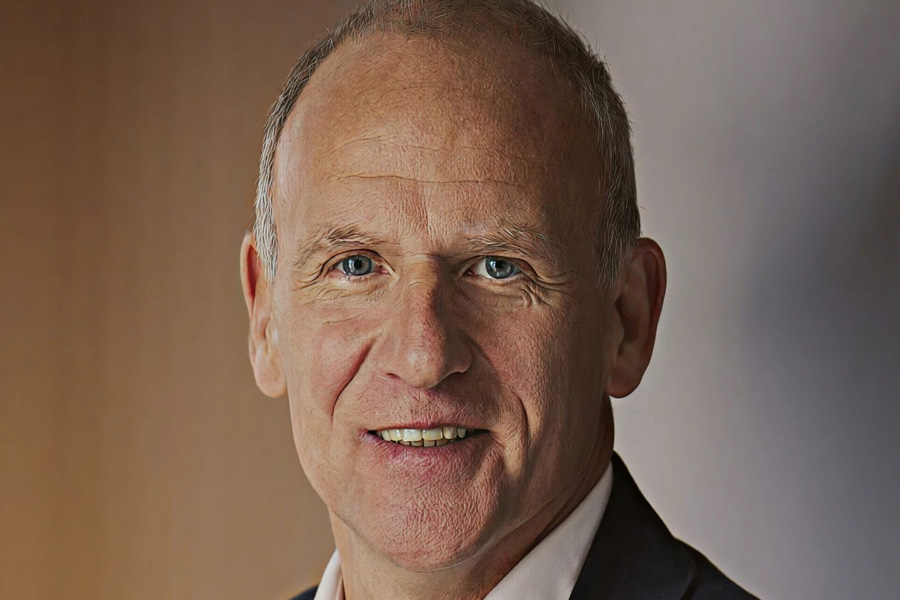
Diageo, among the world's most distinguished premium drinks companies, now enters a new chapter under the leadership of CEO Sir Dave Lewis.

The collaboration brings together the storied Maison and independent master watchmaker Denis . . .