

LVMH's Abu Dhabi Duty Free Sale Signals a New Chapter for Luxury Fashion Brands in Middle East Travel Retail
The Middle East continues to establish itself as one of the most strategically important destinations for global wealth, international travel and luxury consumption. The latest development at Abu Dhabi’s Zayed International Airport adds another dimension to that evolution.
LVMH is transferring the Abu Dhabi airport operations of travel retailer DFS to Miami based Falic Group, the company behind Duty Free Americas. The transaction will give Falic Group control of a substantial luxury retail portfolio at one of the United Arab Emirates’ principal international gateways.
For Luxury Fashion Brands, the significance extends beyond the transaction itself. Abu Dhabi combines expanding international passenger volumes, considerable private wealth and an increasingly sophisticated luxury ecosystem.
For the 1%, airports such as Zayed International are becoming an extension of the luxury journey.
Abu Dhabi Becomes a Strategic Luxury Gateway
Zayed International Airport has the capacity to welcome as many as 45 million passengers annually, while approximately 32 million travelers passed through the airport last year, according to information accompanying the transaction.
This scale creates an important international audience for Luxury Fashion Brands.
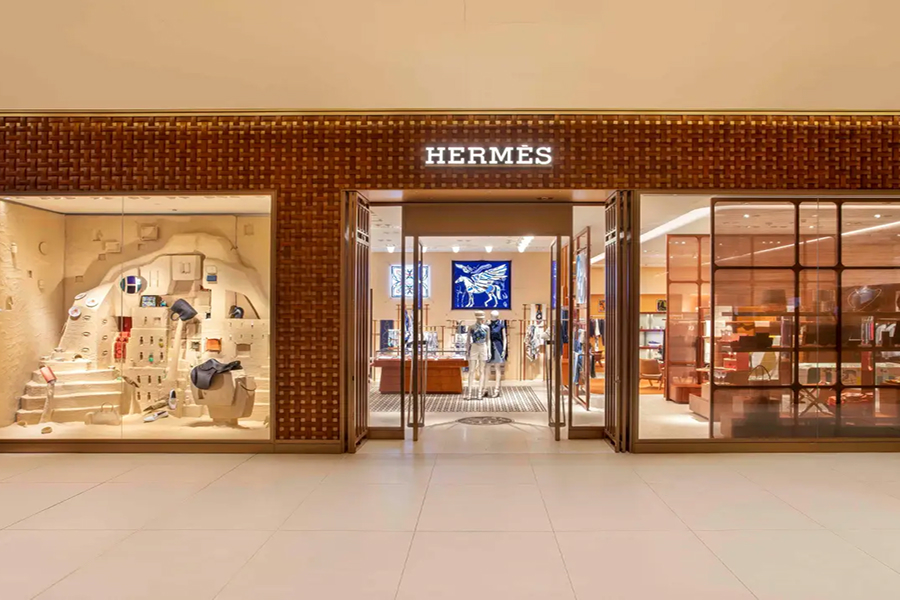
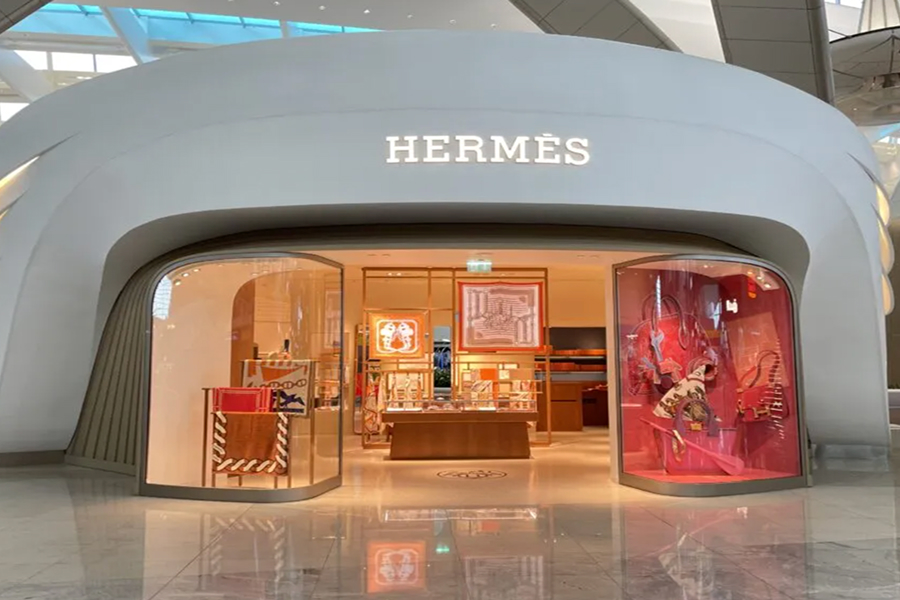
The retail concessions involved in the acquisition span luxury and contemporary fashion, watches, jewellery and eyewear. The terminal brings together maisons including Hermès, Gucci, Bottega Veneta, Saint Laurent, Balenciaga, Burberry, Bvlgari, Omega and Zegna.
The environment gives travelers the opportunity to engage with multiple luxury categories within a single international destination.
For Ultra High Net Worth Individuals, this reflects the increasingly interconnected nature of luxury consumption. Fashion, watches, jewellery, hospitality and travel exist within the same lifestyle rather than as separate purchasing categories.
The Middle East Sits at the Intersection of Wealth and Mobility
Abu Dhabi occupies a particularly valuable position within the international luxury economy.
The city has developed an ecosystem combining private wealth, sovereign capital, culture, hospitality, aviation, property and premium retail.
Zayed International Airport functions as an international gateway to that ecosystem.
For Luxury Fashion Brands, airports serving cities such as Abu Dhabi provide access to residents alongside globally mobile travelers moving between Europe, Asia, the Middle East and the Americas.
The value of these clients becomes especially significant when viewed through the scale of global ultra wealth.
Altrata’s World Ultra Wealth Report 2025 identified 510,810 Ultra High Net Worth Individuals worldwide, defined as people with fortunes exceeding $30 million. Together, they controlled approximately $59.8 trillion in wealth at the end of June 2025.
This audience represents one of the most important client groups for the future of global luxury.
The 1% Accounts for $290 Billion in Luxury Spending
The relationship between Ultra High Net Worth Individuals and luxury becomes particularly clear through spending.
Altrata estimates that the ultra wealthy spent approximately $290 billion on luxury goods and services in 2024, representing 21% of all individual luxury spending worldwide.
That purchasing power comes from a population representing only around 1.1% of the global high net worth community.
For Luxury Fashion Brands, this concentration of spending reinforces the importance of placing exceptional retail experiences where the world’s wealthiest individuals live, travel and spend their time.
International airports are naturally part of that network.
The most valuable luxury travelers can move regularly between residences, business interests, hotels and leisure destinations across several continents. The airport therefore becomes another touchpoint through which a maison can maintain its relationship with an international client.
Travel Retail Evolves Into Luxury Retail
Duty free retail has evolved significantly from its traditional foundations.
At the highest levels of international travel, airport boutiques increasingly resemble luxury shopping environments found on Avenue Montaigne, Via Montenapoleone, Bond Street or Rodeo Drive.
Architecture, product curation, private clienteling and service are becoming increasingly important.
This transformation is particularly relevant in the Middle East, where airports frequently serve as architectural and hospitality statements for their destinations.
For Luxury Fashion Brands, the objective is increasingly to create continuity between the flagship boutique and the airport environment.
A client encountering a maison in Abu Dhabi should experience the same craftsmanship, identity and attention that defines the brand in Paris, Milan or New York.
Luxury Follows the Global Movement of the 1%
The importance of travel retail becomes even clearer when considering the lifestyles of Ultra High Net Worth Individuals.
The ultra wealthy spend across multiple categories linked directly to international mobility.
Altrata estimates that their annual luxury expenditure includes approximately $28.6 billion on private jets and yachts and $25.3 billion on luxury hospitality. The report also notes that private jet and yacht spending is overwhelmingly associated with the ultra wealthy.
These figures demonstrate how closely travel and luxury consumption are connected.
A UHNW client may travel privately to Abu Dhabi, stay within a five star hospitality environment, dine at an internationally recognized restaurant, visit cultural institutions and purchase fashion, watches or jewellery during the same journey.
Luxury Fashion Brands are therefore participating in a much larger lifestyle economy.
A Powerful Network of Global Clients
The value of an Ultra High Net Worth Individual also extends through their personal network.
According to Altrata, the typical UHNW individual has direct connections with more than 70 other UHNW individuals through professional, personal and civic relationships.
For luxury brands, this creates an extraordinary network effect.
A compelling private shopping experience can generate influence far beyond one transaction. Exceptional service becomes part of conversations within highly connected circles of entrepreneurs, investors, collectors and international families.
This is especially relevant within destinations such as Abu Dhabi, where business, investment, culture and luxury frequently intersect.
For the 1%, recommendations often travel through trusted personal networks.
Luxury Fashion Brands and the Future of Airport Clienteling
The next evolution of airport luxury could increasingly revolve around personalization.
For a globally mobile UHNW client, the ideal experience begins before entering the boutique.
A client advisor could understand when an important customer is travelling through Abu Dhabi, prepare relevant pieces according to previous purchases and preferences, arrange a private consultation and coordinate purchases with the client’s next destination.
Luxury retail then becomes almost invisible in its convenience.
The experience revolves around recognition, access and time.
For the 1%, saving time while receiving exceptional service represents a particularly powerful form of contemporary luxury.
Abu Dhabi's Importance Extends Beyond the Airport
The strategic value of the transaction also reflects Abu Dhabi’s broader development as an international luxury destination.
The emirate increasingly connects culture, hospitality, investment, architecture and high end retail.
This creates fertile ground for Luxury Fashion Brands seeking relationships with affluent residents alongside international visitors.
The continuing expansion of global ultra wealth strengthens this opportunity.
Altrata reported that the global UHNW population reached 510,810 individuals in June 2025, following growth of 12% during 2024 and a further 5.4% during the first half of 2025. Their combined net worth reached $59.8 trillion.
The population of potential private clients is therefore expanding alongside the infrastructure designed to serve them.
A Strategic Evolution for LVMH
The transaction also forms part of a period of portfolio evolution for LVMH.
The group recorded approximately €38.6 billion in revenue during the first half of 2026, according to the source material, while continuing to manage its portfolio of businesses and investments across the global luxury industry.
The transfer of the DFS Abu Dhabi operation places the airport concessions within Falic Group’s international travel retail network.
For Duty Free Americas, Zayed International Airport provides an immediate presence within one of the world’s important emerging luxury travel markets.
For the brands represented within the terminal, the fundamental opportunity remains unchanged: access to millions of international travelers and some of the world’s most valuable consumers.
The Future of Luxury Fashion Brands Is Global and Mobile
Luxury Fashion Brands increasingly need to understand the 1% as a global community rather than a collection of individual national markets.
Their clients live internationally.
They invest internationally.
They maintain residences across multiple cities.
And they move between global centers of finance, culture, leisure and hospitality.
Airports connecting these destinations consequently become important parts of the luxury ecosystem.
Zayed International Airport represents precisely this kind of environment.
For the 1%, luxury exists throughout the journey. It appears in the aircraft, the airport, the hotel, the restaurant, the boutique and the experiences awaiting at the destination.
For Luxury Fashion Brands, the opportunity lies in ensuring that exceptional service follows the client wherever that journey leads.
Share Now
LATEST
POPULAR