Jacques Marie Mage Unveils Tokyo Gallery: Where Abstract Art Meets Optical Precision
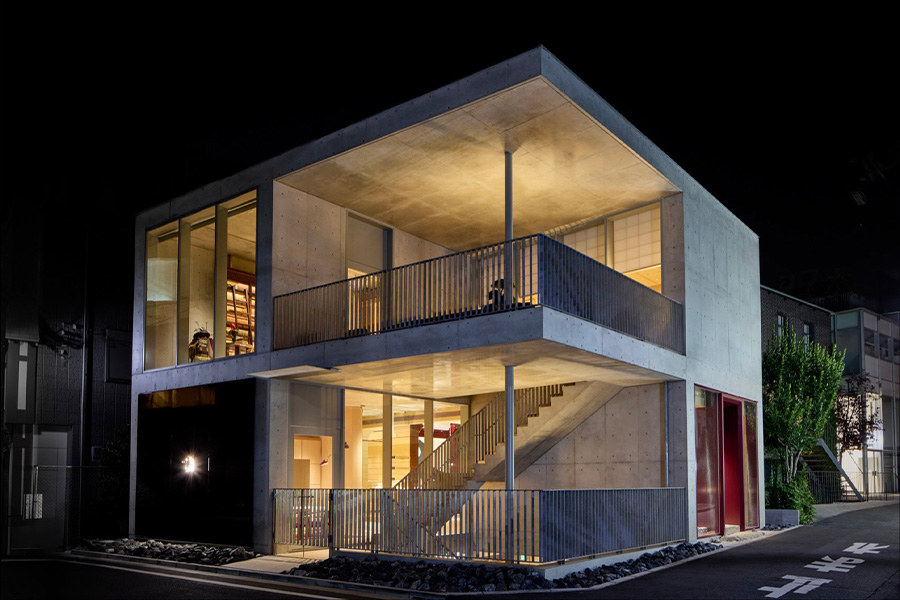
Tucked away in the refined backstreets of Tokyo’s Omotesando district, the newly opened Jacques Marie Mage flagship is not a store. It is a statement. For the one percent, for whom eyewear is not a necessity but a collectible, the brand’s Tokyo gallery unfolds as a spatial expression of abstract art, elevated design, and global connoisseurship.
Founded in 2014 by French designer Jérôme Mage, Jacques Marie Mage has captivated the luxury eyewear world with limited-production masterpieces, each frame blending architectural discipline with artistic flair. But beyond eyewear, Mage is curating an experience. And nowhere is this vision more fully realized than in the Tokyo flagship, a three-storey atelier conceived as a live-in gallery where every detail—material, proportion, silence—is intentional.
A Gallery for the Gaze
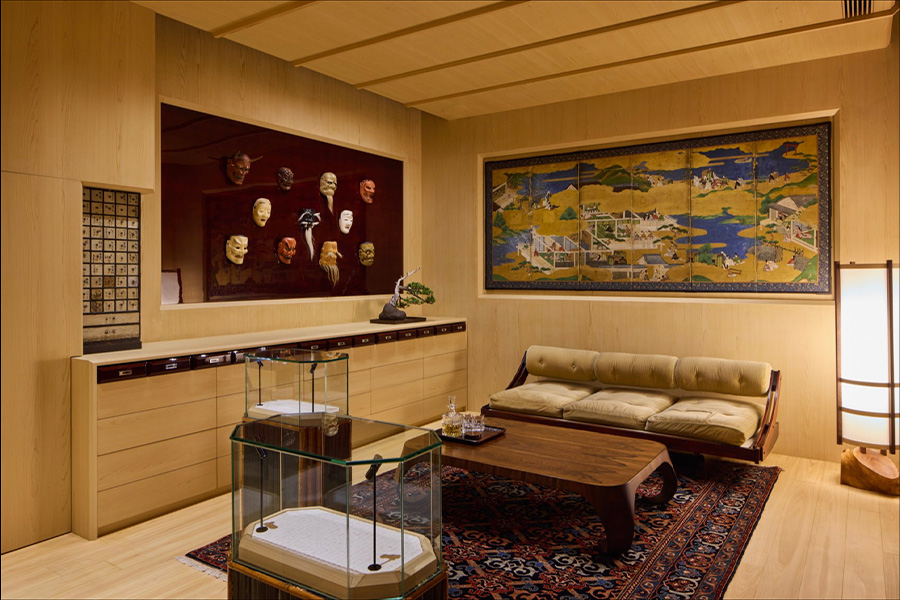
Designed by Shinichiro Ogata of SIMPLICITY, the space draws on the essence of Japanese wabi-sabi while integrating European elegance. From the moment you enter the Hinoki wood-lined corridor, flanked by embedded vitrines and cabinetry, the journey begins. Art here is not framed on walls but integrated into the architecture. The abstract calligraphy of Daichiro Shinjo becomes not only a backdrop, but a philosophy, setting the tone for a tactile dialogue between tradition and vision.
The upper floor is equally meditative: a consultation lounge anchored by Edo-period screens, vintage armchairs, and ceremonial Noh masks. Here, one does not try on frames—they experience a ritual. In a private room, custom jewellery glistens between handcrafted bookshelves, extending the brand’s artistry into new categories of collectibility.
The basement completes the immersion. A landscaped patio and bar surrounded by rare optical instruments from 17th-century Europe and a monumental calligraphic piece offer a sensory echo chamber where conversation and contemplation can flourish.
For the One Percent, Art is Ownership
According to the 2025 Art Basel and UBS Art Market Report, nearly 41 percent of Ultra High Net Worth art collectors now prioritize purchases that blend function with artistic value—a trend epitomized by Jacques Marie Mage’s approach. With over 60 percent of UHNW collectors under 55 actively acquiring design objects that merge storytelling with rarity, the brand’s Tokyo presence positions it not just as a luxury label, but a new school of functional abstraction.
Japan itself plays a critical role in this ecosystem. Long known for its discreet luxury culture and reverence for craft, the country is home to an estimated 12,000 UHNWIs, many of whom increasingly favor under-the-radar, collectible design over visible status symbols. The decision to open in Omotesando—Tokyo’s epicenter of minimalist luxury—is not accidental. It’s a message to the discerning elite: we see through the noise.
The Rise of Wearable Art and Abstract Influence
With abstract art continuing to dominate both galleries and private residences—particularly in the portfolios of younger HNWIs—Jacques Marie Mage’s curation of space and product aligns with a broader aesthetic shift. In a world saturated with overstimulation, abstraction offers clarity. In objects like his frames, the lines are pure but emotionally charged. The absence of logo or excess creates intimacy. And that, for the 1 percent, is the new language of luxury.
A New Collecting Frontier
For those who collect not only objects but atmospheres, this Tokyo flagship is more than retail—it is resonance. It invites the UHNW individual to inhabit a space where the boundaries between art, ritual, and craftsmanship dissolve.
In the words of Mage himself, “We do not create eyewear. We create perspective.” And from Omotesando, that perspective is abstract, elevated, and impeccably rare.