

Arnault’s $1.6 B Stake Grab Signals Power Move Among Luxury Fashion Brands
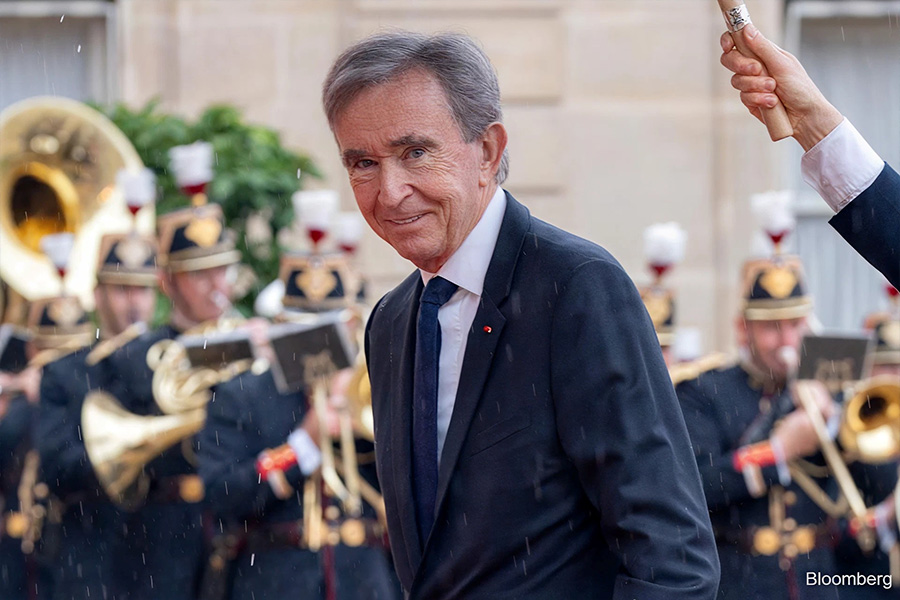
Bernard Arnault has quietly amassed approximately $1.6 billion of shares in LVMH Moët Hennessy Louis Vuitton (LVMH) over the past eight months, positioning himself closer to owning half of the world’s leading luxury conglomerate. This decisive accumulation comes while the broader luxury sector navigates a period of earnings softness — and speaks volumes about the strategic rationales implicit in the global elite’s approach to luxury fashion brands.
Documents filed with the Paris Stock Exchange indicate Arnault, through his holding vehicles, purchased roughly 2.5 million shares, equivalent to about 0.5 percent of LVMH’s capital stock, during a period of weakened market sentiment and share-price decline. Despite already controlling nearly 65 percent of voting rights at LVMH, these additions reflect a move to cement generational control and preserve long-term strategic sovereignty.
Why This Matters to the Ultra High Net Worth Segment
For the 1 percent — sophisticated, deeply invested individuals shaping the narrative of luxury — this is not just a stake purchase. It signals where the real value in luxury fashion brands lies: entrenched control, enduring brand equity, and the capacity to steer global luxury trends rather than merely respond to them.
According to recent industry reports, ultra-wealthy consumers — those with net assets of $30 million or more — account for more than 40 percent of global luxury expenditure and are projected to grow at an annual rate of 5-7 percent through 2030. These individuals are drawn to brands with longevity, heritage, and the means to curate elevated experiences beyond mere products.
Arnault’s strategy, then, is aligned with this shift. By augmenting his control over LVMH, he is effectively doubling down on the very houses that dominate the vocabulary of global elite style. The message: ownership of heritage luxury fashion brands is not about trendy bets; it is about durable capital, cultural authority, and access to peer-to-peer networks of wealth and influence.
Power Consolidation in the Age of Brand Fragmentation
In a luxury environment where market expansion is increasingly complex, Arnault’s consolidation move stands out. Unlike many conglomerates chasing growth through diversification, his approach centres on deep control of fewer, higher-value assets — a strategy befitting the luxury sector contracting to essentials and rarity.
His buying spree occurred during a downturn in LVMH’s share performance, underscoring the long-term horizon at play. Within a portfolio of over 75 maisons — including Louis Vuitton, Dior, and Bulgari — the control focus serves both as an insurance policy and a lever to shape future creative, cultural and financial direction.
For UHNW individuals whose interest lies in blue-chip luxury holdings, this is a subtle but significant marker: Ownership stake, operational control and governance matter as much as the aesthetics of the brand.
Strategic Implications for Luxury Fashion Brands and Collectors
What does Arnault’s move mean for collectors, brand investors and members of the ultra-affluent tier keeping a close eye on luxury architecture?
- Heritage brands remain investment-grade: The consolidation reinforces the notion that top-tier luxury fashion brands are not speculative — they are structural assets with multi-decade horizons.
- Control trumps expansion: Brands that maintain governance stability, creative independence and strategic coherence will hold greater appeal to the 1 percent — those who view luxury as identity and legacy.
- Sovereign wealth of luxury resides in culture: Arnault’s investment highlights that the value of luxury fashion brands lies as much in cultural capital as in revenue multiples — especially in markets where UHNWIs are thinking generationally.
Looking Ahead
With LVMH’s market capitalisation exceeding €300 billion and Arnault positioning himself ever closer to the 50 percent ownership mark, the stakes for luxury fashion architecture could not be higher. Its relevance for the 1 percent is clear: access to, and alignment with, the engines of global style and status is rooted in control—not just consumption.
In a world where luxury fashion brands face uncertainty, saturation and shifting consumer dynamics, this bold move is a signal to elite consumers, investors and connoisseurs alike: the future of luxury lies in the hands of those who own the gate-keepers of culture, scale, and sovereignty.
Share Now
LATEST

POPULAR