

Dior Unveils a New Architectural Landmark in Beijing as Luxury Fashion Brands Double Down on China’s Ultra Wealthy
Dior has strengthened its long term commitment to China with the opening of a monumental new flagship in Beijing’s Taikoo Li Sanlitun, positioning the Maison at the crossroads of architecture, culture and high luxury retail.
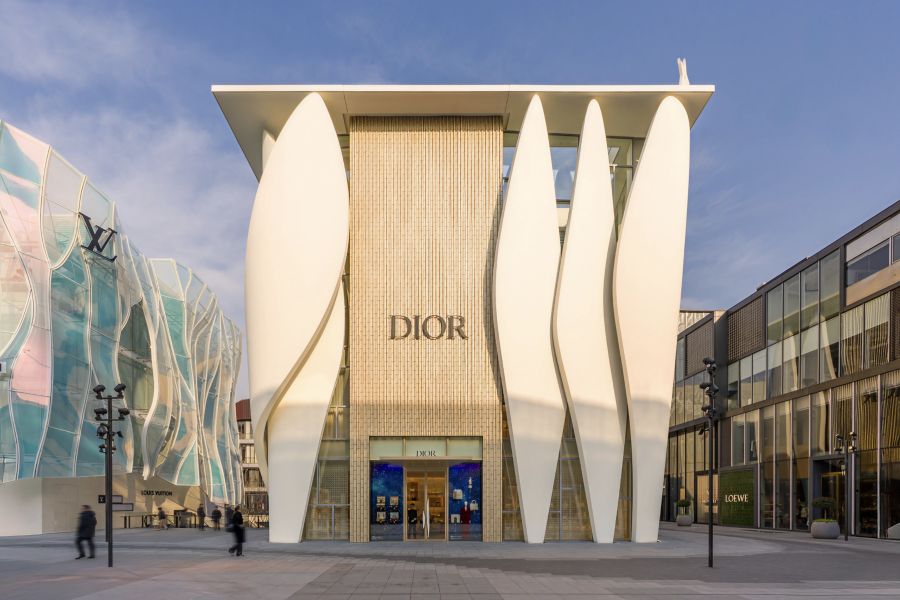
More than a boutique, the five storey House of Dior Beijing has been conceived as a fully immersive environment designed to resonate with the world’s most discerning clients.
At a time when global luxury growth is increasingly driven by Ultra High Net Worth Individuals, the opening signals how leading Luxury Fashion Brands are recalibrating their presence in key cities rather than expanding indiscriminately. According to Wealth X and Bain data, China is now home to more than 62,000 UHNWIs, a figure expected to grow steadily despite broader economic volatility. This segment continues to represent the most resilient and influential luxury consumer group globally.
Architecture as a statement of permanence
The Beijing flagship immediately distinguishes itself through its striking exterior. Designed by French architect Christian de Portzamparc, the façade takes the form of a sculptural structure composed of fourteen petal like forms crafted from golden glass and resin. Rising over sixty feet, the building appears fluid and dynamic, echoing Christian Dior’s approach to draping and movement while subtly referencing classical architectural motifs.
By day, the façade captures and refracts light from its surroundings, including neighboring flagships by Louis Vuitton and Hermès. By night, the structure transforms into a luminous landmark, reinforcing Dior’s visibility within one of Asia’s most prestigious luxury retail districts. The building’s construction required close collaboration with local manufacturers and reflects the increasing importance of regional craftsmanship in global luxury projects.
A new model for experiential luxury
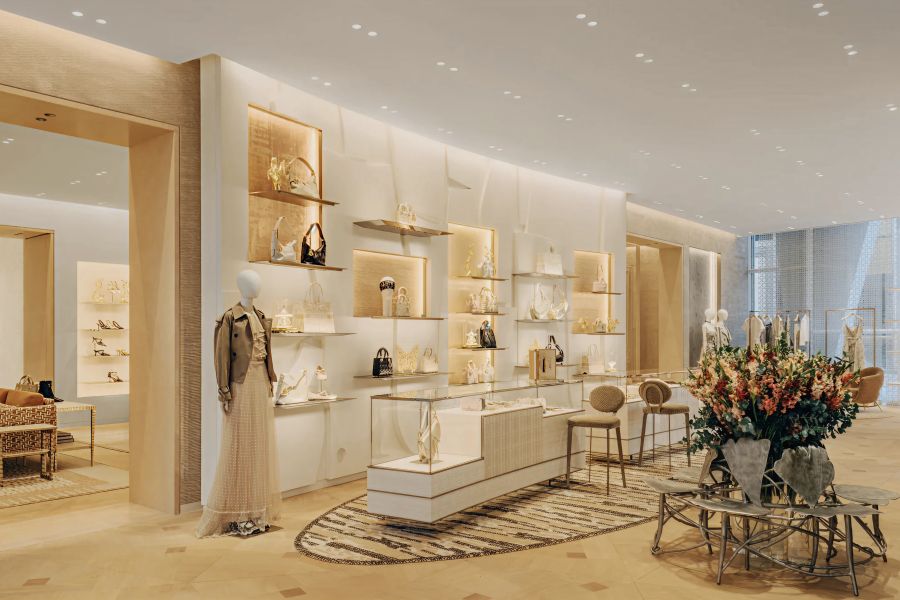
Inside, the flagship unfolds as a sequence of curated experiences rather than a traditional retail journey. From the outset, visitors are immersed in Dior’s universe through refined materials, floral references and museum quality artworks. The space functions as both boutique and gallery, blending fashion, design and contemporary art in a manner that mirrors the lifestyle aspirations of the 1%.
This approach reflects a broader industry shift. The Bain Altagamma Luxury Study indicates that experiential luxury now accounts for more than 55 percent of total luxury spending, as UHNW clients prioritize environments that offer cultural depth, privacy and emotional resonance over transactional shopping.
Throughout the flagship, Dior integrates works by international and Chinese artists, reinforcing its dialogue with local culture while maintaining a global aesthetic language. Furniture, sculptures and installations are positioned alongside collections, blurring the boundaries between retail, exhibition and private residence.
Fashion, gastronomy and the art of living
A defining feature of the House of Dior Beijing is its integration of fine dining. The in house restaurant, Monsieur Dior by Anne Sophie Pic, extends the Maison’s vision of art de vivre into gastronomy. The restaurant space incorporates Chinese artworks that reference Beijing’s historic urban axis, subtly anchoring the experience in place while maintaining Dior’s Parisian heritage.
This convergence of fashion and gastronomy speaks directly to the expectations of UHNW clients, who increasingly seek holistic luxury experiences. Recent industry data shows that UHNW households allocate a growing share of discretionary spending to lifestyle driven luxury, including dining, travel and cultural engagement, alongside fashion and jewelry.
A strategic signal to the luxury market
Beyond its aesthetic impact, the Beijing flagship underscores Dior’s confidence in China’s long term luxury fundamentals. While aspirational demand has softened in parts of the market, Ultra High Net Worth Individuals continue to spend, with Chinese UHNW consumption remaining robust in categories such as haute couture, fine jewelry and bespoke services.
For Luxury Fashion Brands, the message is clear. Growth in the next decade will not come from scale alone, but from deep, meaningful engagement with the world’s wealthiest clients. Flagships like the House of Dior Beijing are less about footfall and more about permanence, prestige and positioning.
As the global luxury industry moves
Share Now
LATEST
POPULAR