

Panerai Returns to Florence With Immersion: A Century of Time, Craft, and Cultural Heritage
For the 1%, the enduring appeal of a great watch often extends far beyond its mechanical complexity. Provenance, craftsmanship, cultural significance, and the ability to tell a compelling story increasingly define the objects that enter important private collections. In Florence this September, Panerai will bring these qualities together through an immersive exhibition celebrating a century connected to the city.
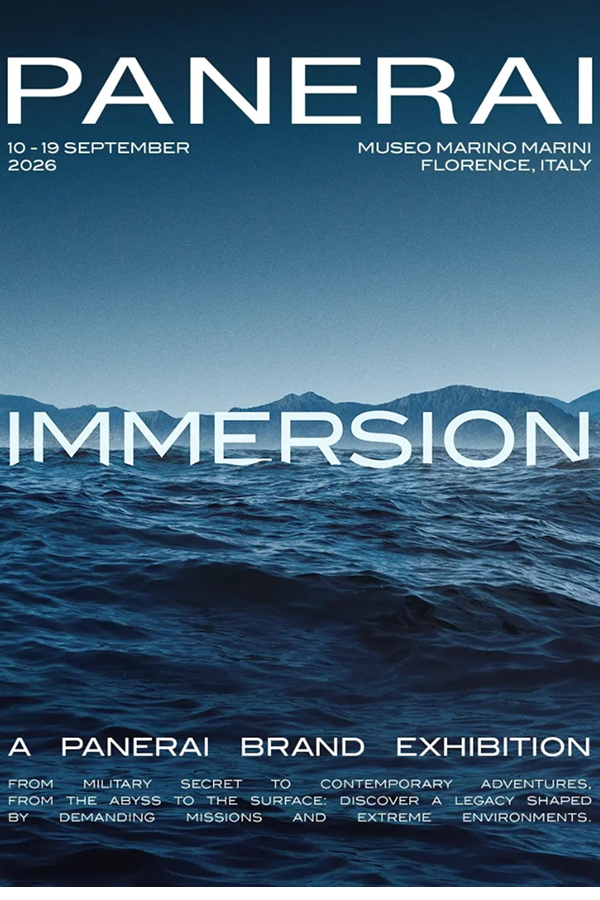
Opening on September 10, 2026 at the Museo Marino Marini, Immersion commemorates 100 years since Panerai established its historic boutique in Piazza San Giovanni. Running until September 19, the exhibition will transform the story of the Italian watchmaker into a journey through engineering, exploration, military history, and contemporary horology.
The setting itself creates an intriguing cultural dialogue. Museo Marino Marini occupies the former church of San Pancrazio and is dedicated to one of Italy’s important twentieth century sculptors. Panerai previously staged its Dive Into Time exhibition within the museum in 2016. A decade later, the Maison returns with an experience conceived around the relationship between its Florentine origins and its contemporary identity.
From Florence to the Open Sea
Panerai’s history in Florence reaches back to 1860, when the Panerai family developed its business around watchmaking and precision instruments. The family’s Orologeria Svizzera became part of the city’s horological landscape, while G. Panerai & Figlio developed professional instruments for the Italian Navy.
Immersion will translate this heritage into a sequence of environments designed to place visitors inside the Panerai universe.
The experience begins with the family’s Florentine origins before entering the atmosphere of a confidential military workshop. From there, visitors descend into an environment inspired by the depths of the ocean, using pressure, darkness, and silence as elements of storytelling.
The narrative then expands toward contemporary exploration, presenting experiences associated with polar landscapes, oceans, and remote natural environments. The final chapter brings nautical instrumentation together with current Panerai watches, connecting navigation, sport sailing, and mechanical precision.
This approach transforms horological heritage into cultural experience. For collectors accustomed to encountering exceptional objects through private viewings, museums, auctions, and exhibitions, Immersion positions the watch within a broader universe of history and human achievement.
Why Heritage Matters to the 1%
For Ultra High Net Worth Individuals, provenance has become an increasingly important component of collecting culture.
The global UHNWI population now exceeds 400,000 individuals, creating an influential international audience for art, watches, jewellery, automobiles, and other collectible categories. Within this ecosystem, objects carrying a compelling history can occupy a distinctive position because they combine material craftsmanship with cultural identity.
Panerai’s story offers precisely this combination.
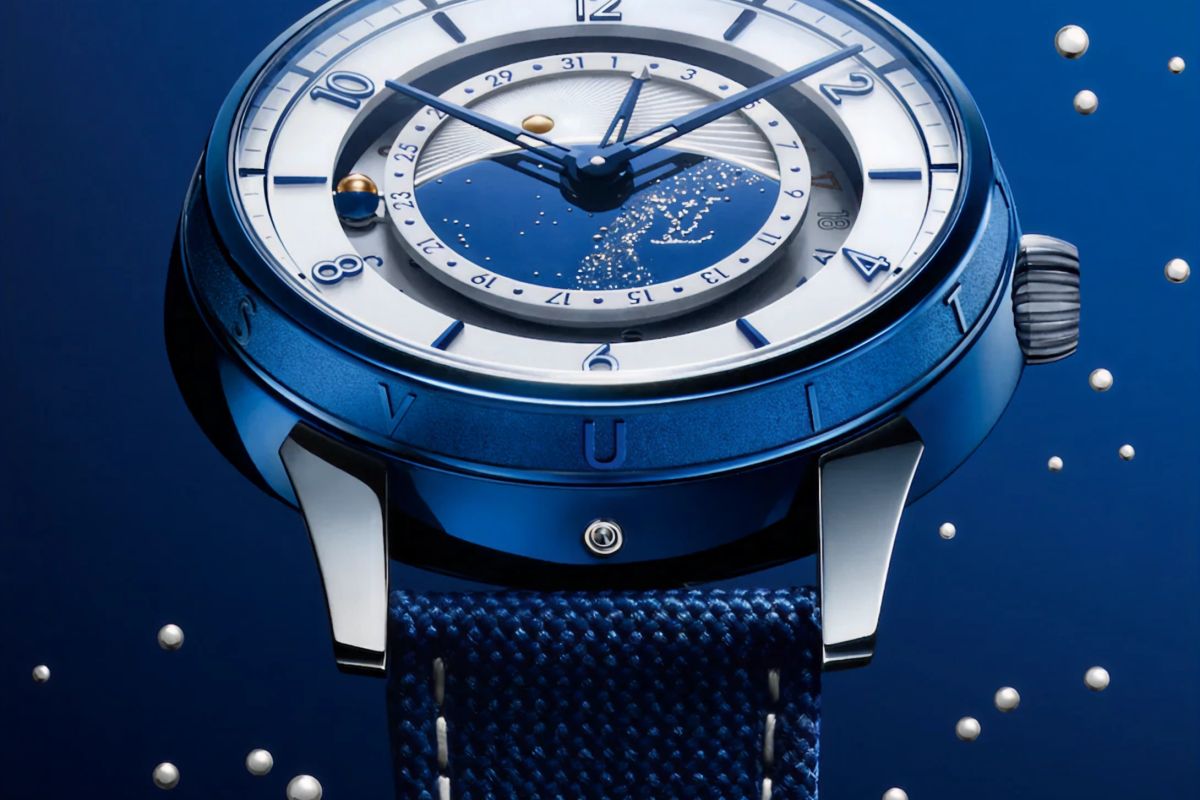
Its early watches were created as professional instruments, incorporating characteristics including strong luminescence, water resistance, durable construction, and extended power reserves. These technical specifications remained associated with military use until Panerai introduced watches to the civilian market in 1993.
The arrival of the first 44mm Luminor models helped establish the distinctive visual language collectors associate with Panerai today. Richemont acquired the Maison in 1997, followed by the development of Panerai’s manufacturing capabilities in Neuchâtel from 2002.
A century after the opening of its Piazza San Giovanni boutique, Panerai is therefore presenting its history through the perspective of continuity. Engineering, exploration, and Italian design remain central to its identity.
Watches, Art, and the Culture of Collecting
The relationship between fine watches and art has become particularly relevant within the collecting habits of the 1%.
The global art market generated approximately $65 billion in sales in 2024, while private sales through major auction houses increased by around 14 percent. This evolution illustrates the appetite among collectors for discreet transactions, specialist expertise, and highly curated access to culturally significant objects.
Research surrounding wealthy collectors also points toward the growing importance of emotional and cultural meaning. Previous UHNWI studies used by The One Percent indicate that 59 percent of collectors value cultural narrative, while younger collectors increasingly gravitate toward works carrying emotional resonance and identifiable cultural roots.
These behaviours extend naturally into horology.
A watch can become a portable expression of provenance in much the same way that a painting or sculpture can represent a particular artistic movement. The attraction lies in authorship, rarity, technique, and story.
Even abstract art, although only indirectly connected with Panerai’s exhibition, provides an interesting parallel. Collectors of abstract art frequently respond to form, material, texture, and emotional interpretation. Mechanical watchmaking communicates through another visual vocabulary, where proportion, material, engineering, and craftsmanship establish an equally personal relationship between object and owner.
For the 1%, these categories increasingly coexist within the same collecting universe.
Florence as Part of the Panerai Story
Location gives Immersion particular significance.
Florence remains one of the world’s defining cities for art, architecture, and craftsmanship. By presenting the exhibition at Museo Marino Marini, Panerai places its horological history within a cultural environment shaped by artistic expression.
The exhibition also demonstrates how luxury Maisons increasingly use museums and cultural institutions to communicate heritage through experience.
For Panerai, the connection feels particularly organic because Florence represents an essential part of the brand’s identity. The city becomes part of the object itself, linking every contemporary Panerai creation to a lineage that began with precision instruments and specialist watchmaking.
This geographical provenance can carry considerable meaning for collectors. Just as the origins of an artwork contribute to its cultural context, the birthplace of a historic watchmaker becomes part of its identity.
A Century Reinterpreted for Contemporary Collectors
Panerai describes heritage as a foundation for its technical expertise and future vision. Immersion translates that philosophy into physical space.
Visitors will move through environments representing the workshop, the ocean, and contemporary exploration before arriving at a presentation connecting historical nautical instruments with current watches.
The exhibition therefore becomes an exploration of time itself.
There is chronological time, represented by a century of Panerai in Florence. There is mechanical time, expressed through watchmaking. There is experiential time, measured through expeditions and navigation. And there is cultural time, where objects acquire meaning as they pass between generations.
For today’s 1%, this final dimension carries particular relevance.
The most compelling collectible objects can become custodians of memory. A watch can represent engineering history, family heritage, personal milestones, and craftsmanship simultaneously. Its value resides within the relationship between these elements.
Panerai and the Future of Collectible Luxury
Immersion arrives at a moment when the boundaries between horology, art, design, and cultural patronage continue to intersect.
Collectors are increasingly building personal universes rather than isolated collections. Contemporary and abstract art may sit beside vintage automobiles, rare watches, jewellery, design objects, and historically important furniture. Each category contributes another layer to a private cultural narrative.
Panerai’s exhibition speaks directly to this evolution.
By presenting its watches alongside the stories of military engineering, ocean exploration, navigation, and Italian craftsmanship, the Maison positions horology within a much wider cultural conversation.
For the 1%, the experience offers an opportunity to consider what ultimately gives an object permanence. Materials matter. Craftsmanship matters. Rarity matters. Yet history and emotional significance can transform exceptional craftsmanship into something deeply personal.
From September 10 to September 19, 2026, Immersion at Museo Marino Marini will invite visitors into that world, returning Panerai to Florence while presenting a century of watchmaking as a living cultural story.
For a Maison born from precision and shaped by exploration, the celebration becomes an expression of time, memory, and the enduring art of collecting.
Share Now
LATEST
POPULAR