

A retenir
- The median U.S. luxury sale price rose 4.7% year over year to $1.37M in the three months ending May 31 (Redfin).
- Luxury prices are climbing more than three times faster than non-luxury prices, up just 1.5%.
- The overall U.S. median hit an all-time high of $408,776 in June, partly pulled up by the high end.
- Hottest luxury metros: Tampa, Miami and Las Vegas for prices; San Francisco for sales volume.
How Small Luxury Hotels of the World is redefining luxury hospitality through individuality, authenticity, and a global community of extraordinary independent hotels.
This exclusive editorial feature explores how Josephine Tee and Small Luxury Hotels of the World™ (SLH) are redefining luxury hospitality by championing independent hotels, authentic experiences, and meaningful travel.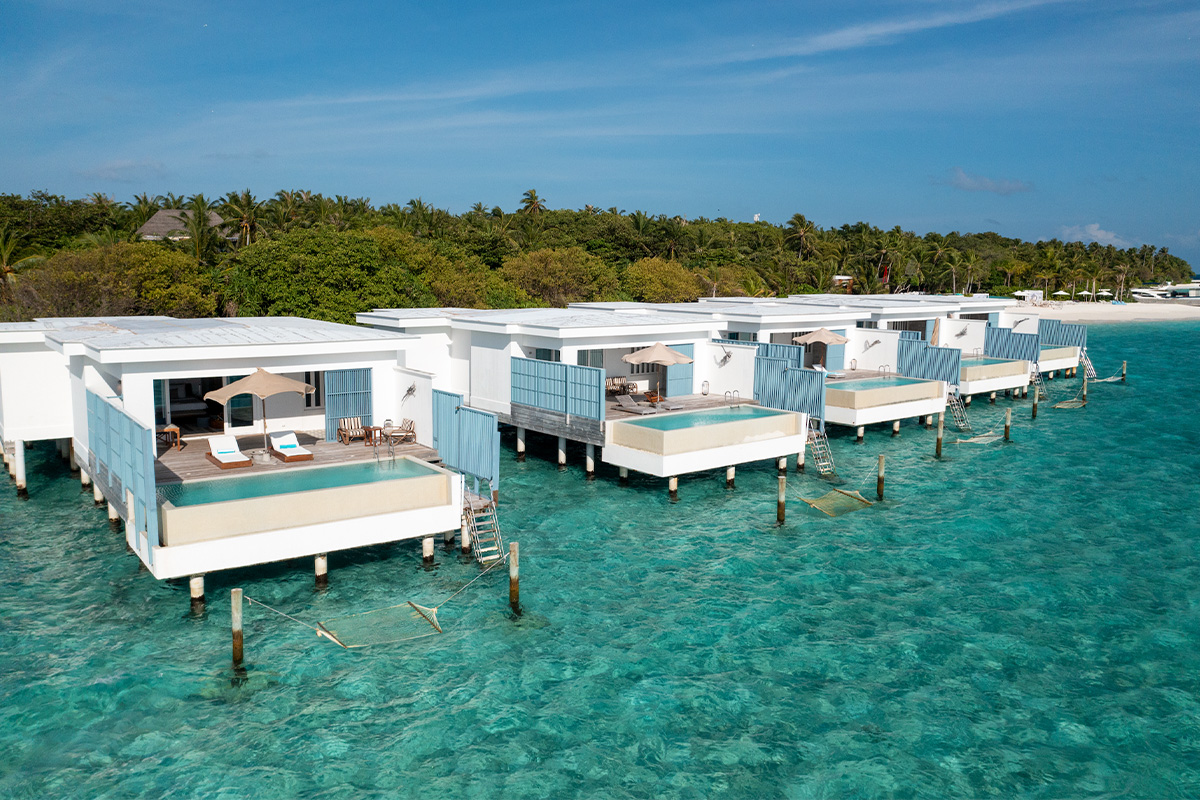
The article examines the evolution of modern luxury, the growing demand for privacy, individuality, and wellbeing among Ultra High Net Worth travellers, and how SLH’s carefully curated global collection continues to preserve the soul of hospitality while shaping its future.
1. Small Luxury Hotels of the World has built a unique collection of independently owned properties across the globe. What philosophy continues to define the SLH brand today?
We were founded in 1991 by founders who looked at the hospitality landscape and saw a gap: independent hotel owners with unique properties and passion, but without the platform, distribution or community that would allow them to compete globally. What has not changed in 35 years is the simplicity of the idea.
The philosophy is that we are the world’s most desirable community of independently minded travellers and independently spirited hotels. Every SLH property has been personally visited and vetted by our team. And every existing member is inspected annually by a team of over 150 trained inspectors based on a 500-point benchmark. That rigour is what the brand promise rests on.
Three things make a hotel SLH-worthy: soul, substance and story. Soul means the property has a genuine sense of identity where it could not exist anywhere else in the world. Substance means it meets the quality standard we guarantee to every guest who books with us. And story means there is a person or purpose behind it: an owner who inherited the family estate and gave it a second life, or who converted a historic warehouse, or who built something entirely new in a landscape they fell in love with.
What has evolved is the scale at which we hold that standard. We added 100 new member hotels globally in 2025 alone, and we’ve added close to 80 by mid-2026. Today, we have over 700 hotels across more than 100 countries. Growth at that pace requires holding the line on what the brand means, and we are unapologetic about that.
2. In your opinion, how has the definition of luxury hospitality evolved over the past few years, particularly among Ultra High Net Worth travelers?
Luxury has shifted from having to feeling. Today’s UHNW traveller is not impressed by a grand lobby, thousand thread-count bedlinen or a Michelin-starred menu that reads like every other five-star hotel. What they will pay a significant premium to find is something that cannot be replicated at scale: genuine human connection, a sense of being truly known, and an experience particular to where it happens. In short, luxury hospitality has evolved from ‘good feel’ to ‘feel good’, and that expectation now runs through the entire journey, from the moment of booking to the moment of departure.
For the UHNW traveller specifically, privacy and exclusivity have become the ultimate luxury signals. Our average hotel size is around 50 rooms. A six-room property like Siri Sala Private Thai Villa in Bangkok or seven-room Lon Retreat & Spa near Melbourne, where the team knows your preferences before you have checked in and the entire property feels like it was curated for you specifically, is as luxurious an experience as any grande dame hotel.
What the highest-spending guests are also telling us is that they want their accommodation to mean something beyond comfort. Our Private Collection — 240 handpicked standalone villas spanning Japan, Thailand, Europe, Africa, the Caribbean and beyond — was developed in direct response to that question. They are fully self-contained spaces that promise all the perks and personalised service of a boutique hotel with complete privacy: a private pool, a private kitchen, private staff, and the knowledge that no one else is walking the same corridors. For a UHNW family, a multigenerational group, the Private Collection represents a form of independence that even the most celebrated grand hotel cannot offer.
3. Today’s affluent travelers increasingly seek authenticity and individuality. How does SLH ensure each property delivers a distinctive experience while maintaining the brand’s commitment to excellence?
This is the central tension of what we do, and the answer is that we never try to resolve it by standardising the experience itself. What we standardise is the quality of the experience. The character inside that promise is entirely the hotel’s own.
The analogy I use is this: like a fingerprint, we want every imprint left on a guest’s memory to be different. No two SLH hotels are the same, and that is entirely the point. What we guarantee is that wherever a guest stays within our collection, whether it’s a jungle cabin in the highlands of North Bali, a vineyard sanctuary on Shandong, or a casbah in the Moroccan Sahara, they will find a property that has been personally vetted to strict benchmarks, and that delivers on the fundamental promise of quality and genuine care.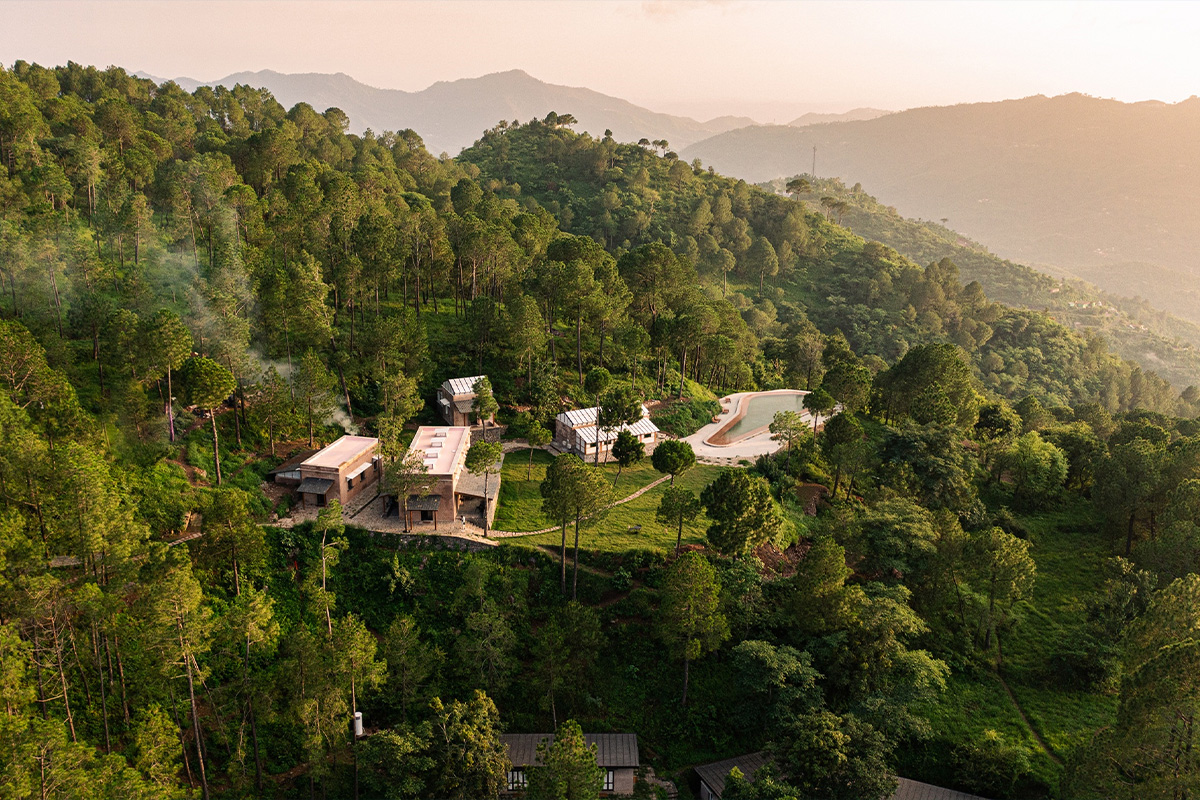
The mechanism that protects this is our annual mystery inspection, a rigorous, independent assessment conducted by trained inspectors who visit without announcement.
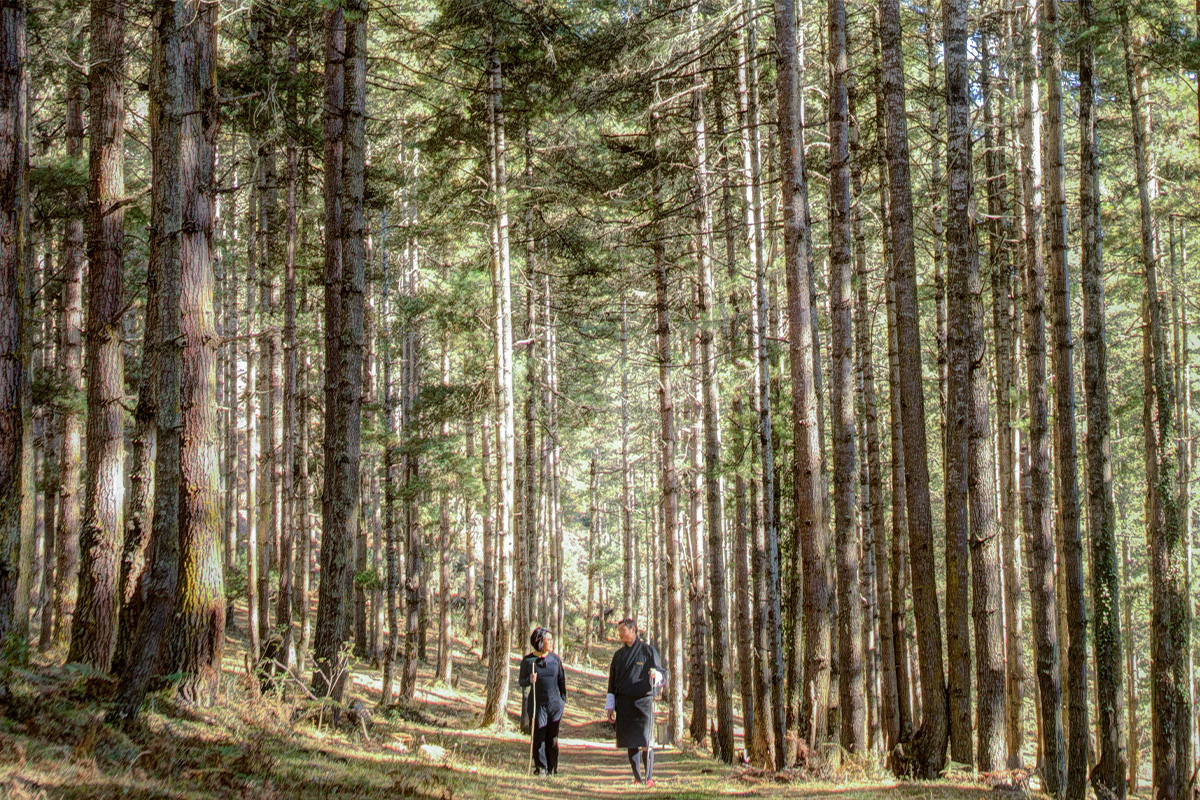
Where authenticity is at its most extraordinary is in the owner-operator relationship. Rather than being managed from a distance by a hospitality group, our hotels are run by the people who built and live near them, who have a stake in their community and their landscape. Amaya in Himachal Pradesh is one of the most compelling examples in our Asia Pacific portfolio. The founder took the concept of belonging to a place further than most: over 25 acres of land have been reforested since the hotel’s birth, with more than 1,000 trees planted on the estate. The property was designed by celebrated Indian architect Bijoy Jain, using copper roofs, stone walls finished in a mix of lime and local soil, barefoot paths woven through the conifers. Guests can join the resident horticulturalist, who grew up in the local village, at dawn to forage mulberries, apples and wild sorrel from the hotel orchard before breakfast. Dining is shaped by seasonal menus throughout the year or experiential dining using creative fermentation processes; evenings are spent watching movies by moonlight or beside a bonfire beneath the Himalayan sky.
4. Wellness, sustainability, and meaningful travel have become increasingly important within luxury hospitality. How are these influencing the way SLH and its member hotels continue to evolve?
They are the direction the entire industry is moving, but we have been leading in that direction for years.
- Wellbeing: We launched our Wellbeing Collection in 2025, and it is expanding as we approach its first anniversary. It is built around three pillars: rest, reconnection, and resilience. The curation bar is high as we do not simply admit hotels with a nice spa menu. We look for a holistic wellbeing philosophy woven through the property. Our first to be included in India, Dharana at Shillim in the Sahyadri Mountains pairs traditional Ayurveda with advanced diagnostic tools and personalised consultations. That depth of approach (expert-led, locally rooted, architecturally coherent) is what the Wellbeing Collection was built to represent.
- Sustainability: Our Considerate Collection now includes 84 properties across 40+ countries, each independently assessed against GSTC criteria across three pillars: Community Minded, Cultural Custodians and Environmentally Conscious. Since launching our Call-to-Action Report last year, which showcases solution-led success stories from standout properties, we have continued to grow the Collection meaningfully and consciously. We have also introduced a set of 10 minimum standards across our wider portfolio last year, ensuring that responsible hospitality becomes part of the SLH experience as a whole. These cover energy and water efficiency, ethical procurement, DEAI, and more.
- Meaningful and inclusive travel: Our guests are increasingly choosing a property that does something for them beyond accommodation, where they get discretion and the assurance of genuine care. Our smaller-scale, owner-operated hotels naturally excel at providing a personalised and culturally thoughtful experience. We are seeing a growing demand across segments — from female solo travel to halal travel and beyond — and our role is to offer more choice, so every traveller feels genuinely welcomed.
- Accessible luxury: True inclusivity means being welcoming not just in spirit but in practice. For guests with physical, sensory, neurodivergent or other visible and non-visible exceptionalities, the gap between them has often been wide. Our partnership with IncluCare, with over a decade of specialist consulting to the tourism industry, is our commitment to narrow it. Their verification programme gives SLH hotels a structured pathway to elevate service and accessibility for every guest, and properties that complete it earn the “Verified by IncluCare” accreditation, an independently recognised signal that the hotel has done the work. The results are already significant: Amilla Maldives became the world’s first IncluCare-certified resort, while Hotel Éclat Beijing and La Miniera Pool Villas Pattaya are now the first verified properties in China and Thailand respectively.
- We also recently deepened our partnership with OutThere, a leading voice in inclusive luxury travel, to launch our LGBTQIA2S+ Inclusion Charter and Toolkit. A global commitment rolled out across all member hotels to educate and share best practices, it helps every property create more welcoming experiences all year round. At its heart, it reflects what we believe hospitality should be: an open invitation where every guest and team member feels valued and respected. Across our Asia Pacific portfolio, this already comes to life in properties like Oriental Residence Bangkok, Marasca Samui, and Lanson Place Causeway Bay in Hong Kong.
5. Looking ahead, what trends are you currently observing among affluent travelers, and how do you see luxury hospitality evolving over the next five years?
Several shifts are reshaping what the most discerning guests are looking for, and they all point in the same direction for SLH.
- Going deeper, not broader: Guests are no longer arriving on day one with a packed four-country schedule. They’re arriving with a single base hotel, a loose framework and an appetite to be surprised. A guest who used to give Kyoto three nights is now giving it eight, asking the ryokan owner where they actually eat dinner, and ending up in a neighbourhood that isn’t in any magazine. Our hub-and-spoke network of member hotels, especially in countries like Japan and Thailand, are where we are seeing this most clearly. For example, repeat visitors who have done the Golden Route are now returning for the regional Japan they were told about by an SLH owner on a previous trip. The property became the guide, not just the bed.
- The rise of the return visitor: A growing share of our guests are seasoned travellers who have already experienced the iconic destinations and are now seeking the road less-travelled. They’re asking, “What’s the version of this I haven’t seen yet?” From Yunnan and Dunhuang in China to Indonesia’s lesser-known islands and emerging destinations in India such as Ladakh, these travellers are looking for under-the-radar experiences. In response, we are growing our portfolio in regional and secondary destinations we believe will become tomorrow’s must-visit places.
- Wellbeing as the new luxury driver: The Wellbeing Collection is barely a year old and already reflects a shift in how guests think about what a hotel stay should do for them. We will see this deepen as more hotels build around preventive health, longevity, and the kind of deep restoration that requires days rather than a spa hour. Our scale, our vetting rigour, and our relationships with owner-operators who genuinely believe in what they are building make us very well placed here.
- The next generation of UHNW guests: Millennial and Gen Z affluent travellers are now driving an increasing share of our bookings, and they are motivated by the quality of their encounters throughout their stay, rather than the brand associated with their stay.
6. What role do local culture, storytelling, and a strong sense of place play in creating unforgettable hospitality experiences?
The hotels I curate are born out of the passion of their owners. That passion lends a unique backstory to each establishment. It could be a tale of inheritance or the transformation of a former warehouse or prison. No two SLH hotels share the same origin story, the same DNA. The origin story is what shapes everything that follows: the concept, architectural design, food, service, and hotel experiences.
When Qiushui Villa in Hangzhou opened on the estate of celebrated journalist Shi Liangcai overlooking West Lake, the property was inspired by one of the Four Great Classical Novels of Chinese literature – Dream of the Red Mansions. Or consider Shanghai Muh Shoou Zhujing, a newly opened 55-room retreat urban retreat with courtyard suites that is surrounded by SH Blooming Garden and metasequoia forests, away from the hustle and bustle of Shanghai’s city centre.
What this tells us about the future of luxury hospitality is important: the properties that will endure are the ones that could not exist anywhere other than where they are. Our Finest Collection — 29 of our most iconic and destination-defining member hotels globally are each destinations in their own right, with character so defined that the property itself is the reason for the journey.
Our job is to connect with hotel owners who understand this instinctively and build something extraordinary, work closely with their community, and then amplify that story to the world.
7. Finally, what does modern luxury personally mean to you today?
I have been returning to this question throughout my years at SLH, and my answer has actually simplified over time rather than grown more complicated.
Modern luxury, for me, is to be in a place where I feel genuinely welcomed rather than processed. It is to stay somewhere where someone — ideally the owner, or someone who learned from the owner — knows why they built it and is glad you came. It is to eat a meal that tells me something true about the valley it was grown in, or the culture that invented the recipe. The modern luxury touch is personal, quiet and unforgettable.
Independent luxury hotels truly resonate with me. I enjoy working with a community of hotel owners who had the vision and the courage to build something entirely their own, who refused to sell out to a formulated approach, and who trust us to share their personal story with the world. That is an extraordinary privilege, and it is what gets me on a plane to vet a new hotel in Dalhousie in India or Atami in Japan.
If I think about the moments in my career that felt most like what luxury actually is, they are all small and simple pleasures. Having a private breakfast set up inside the Gangtey Monastery in Bhutan that is filled with spiritual heritage and scenic charm. Sipping tea in a heritage house in Chiang Mai that was built in the late 1800s as part of the Borneo Company headquarters. Or staying in the landmark Nagoya TV Tower and enjoying city lights from the Observatory after closing hours. Those are not experiences that scale but they are exactly what SLH was built to find and to protect.
FAQ
What counts as a luxury home in the Redfin data?
Redfin defines luxury homes as those estimated to be in the top 5% of their metro area’s price range, while non-luxury homes fall into the 35th to 65th percentile. All figures cover rolling three-month periods.
Which U.S. cities have the fastest-rising luxury prices in 2026?
Tampa leads with luxury prices up 15.6% year over year, followed by Miami at 14.2% and Las Vegas at 13.7% for the three months ending May 31, 2026, according to Redfin.
Why are luxury prices rising faster than regular home prices?
High-end buyers are less sensitive to mortgage rates and affordability pressures, frequently pay cash, and are competing over unusually tight trophy inventory, so prices at the top 5% climb while the broader market stays sluggish.
Did overall U.S. home prices really hit a record?
Yes. The median U.S. home-sale price reached an all-time high of $408,776 in June 2026, up 2.2% year over year, with the strong luxury segment cited as a key contributor to the growth.