

At a glance
- Richemont opened its 2027 financial year with sales of EUR 6.3 billion, up 20% at constant rates, and jewellery did almost all the work.
- Its Jewellery Maisons grew 24%, a seventh consecutive quarter of double-digit growth, and accounted for roughly 89% of the group’s sales increase.
- The same split appears everywhere: LVMH fashion and leather goods fell 2% organically in Q1 2026 while watches and jewellery rose 7%. At Kering, fashion fell 3% and jewellery rose 22%.
- This is no longer one strong company. It is a category behaving differently from the rest of luxury.
Luxury has spent two years being described as a single market in a single slowdown. The first-half results season of 2026 has made that description untenable. Jewellery is now growing at double digits while leather goods contracts, and the gap is visible inside the same groups, in the same quarters, under the same management. Richemont’s first quarter, published on 15 July, is the clearest statement of it yet: sales of EUR 6.3 billion, up 20% at constant exchange rates, with the jewellery houses delivering almost the entire increase. Here is what the numbers actually show, and why the divergence is structural rather than seasonal.
What Richemont Reported, and Why the Detail Matters
For the three months to 30 June 2026, Richemont posted sales of EUR 6.329 billion, up 20% at constant exchange rates and 17% at actual rates. The breakdown is where the story sits.
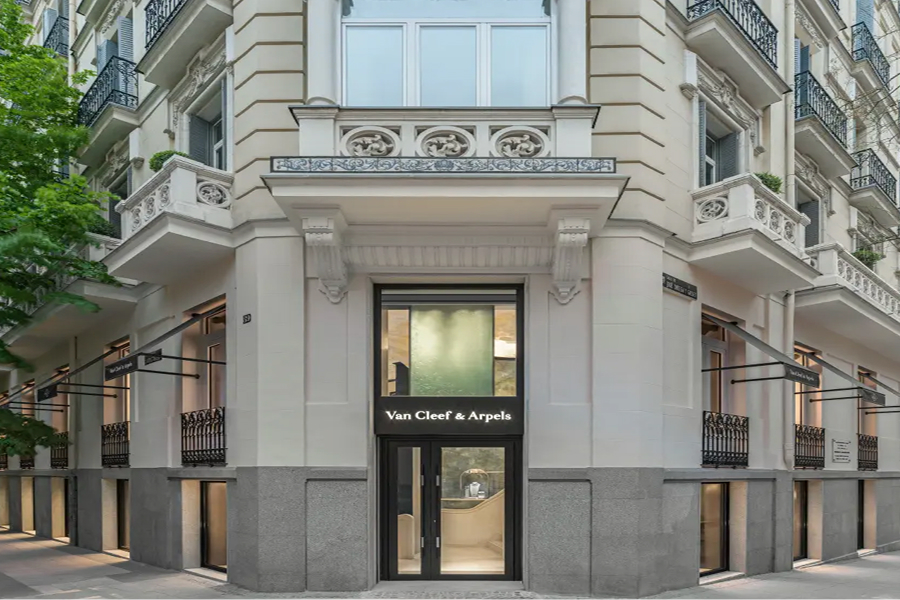
- Jewellery Maisons (Cartier, Van Cleef & Arpels, Buccellati, Vhernier): up 24% at constant rates, a seventh consecutive quarter of double-digit growth.
- Specialist Watchmakers: up 8%, improving sequentially, with double-digit gains in the Americas, Japan and the Middle East and Africa.
- Other, including Fashion & Accessories Maisons: up 9%.
- Retail: up 24% at constant rates, ahead of the group average.
Growth came from every region. Europe rose 11% against a double-digit comparative, the Americas, Asia Pacific and Japan all posted double-digit increases, and the Middle East and Africa returned to growth. There is no single market carrying this, which is precisely what makes it hard to dismiss.
Key figureAround 89%. The share of Richemont’s first-quarter sales growth attributable to its jewellery houses alone. The rest of a EUR 22 billion group contributed the remainder.
The Same Split Shows Up at LVMH and Kering
If this were a Richemont story it would be a company story. It is not. The first quarter of 2026 produced the same pattern at both French groups, which run entirely different portfolios and entirely different strategies.
At LVMH, fashion and leather goods declined 2% on an organic basis while watches and jewellery grew 7%. Group organic revenue growth came in at 1%. At Kering, fashion and leather goods fell 3% on a comparable basis while the jewellery division containing Boucheron, Pomellato, Dodo and Qeelin rose 22%, with overall group revenue flat. We looked at how Kering is reorganising around that division in its jewellery division push.
Three groups, three structures, one identical divergence. When the same spread appears independently across the industry’s three largest players in the same quarter, it stops being a portfolio quirk.
Why Jewellery Is Behaving Differently
Four explanations are doing the work here, and they compound rather than compete.
- Stored value. A high jewellery piece carries intrinsic material worth that a handbag does not. In a period where clients have questioned whether luxury pricing still reflects anything real, that distinction has become decisive.
- Price integrity. Jewellery houses did not run the aggressive price escalation that leather goods did between 2021 and 2024. They arrive at this moment without the credibility problem their fashion counterparts created.
- Occasion durability. Engagements, births, anniversaries and inheritance do not follow the fashion cycle. The demand base is anchored to life events rather than to seasons.
- Retail control. Richemont’s jewellery growth is led by its own boutiques rather than wholesale, which protects presentation, pricing and client data. That control is a large part of why the category has held its margin.
Good to knowRichemont’s full year to 31 March 2026 gives the scale behind the quarterly numbers: group sales of EUR 22.4 billion, up 11% at constant rates, operating profit of EUR 4.5 billion, and profit for the year up 27% to EUR 3.5 billion. Jewellery sales alone reached EUR 16.5 billion. The jewellery business inside Richemont is now larger than most listed luxury companies in their entirety.
What This Changes for the Rest of the Industry
The commercial consequence is already visible in how groups are allocating capital and attention.
Jewellery is becoming the growth engine of choice. Kering has said it expects its jewellery business, including costume jewellery, to triple by 2030. That is not a defensive statement from a group whose fashion houses are in reset, it is a reallocation.
Watchmaking is stabilising in jewellery’s slipstream. Richemont’s specialist watchmakers returned to growth at 8% after a difficult period. Hard luxury as a whole is recovering, but jewellery is doing so roughly three times faster.
The United States remains the swing market. Jewellery has been the standout bright spot for American demand through the wider slowdown, a dynamic we covered in the US market’s resilience, and it is holding.
Key takeawayLuxury is not recovering evenly, it is separating. Categories with intrinsic value, disciplined pricing and event-driven demand are compounding. Categories that relied on price increases and seasonal desire are not. Anyone reading a single industry growth figure in 2026 is reading an average that no longer describes anything.
The Caveat Worth Keeping
Two things could complicate the picture. Gold and precious stone costs have risen, and Richemont has flagged higher raw material costs alongside adverse currency movements even while margins held. A category whose appeal partly rests on material value is also exposed to material cost.
The second is valuation rather than trading. Richemont’s shares have re-rated sharply on this run of results, which means the market has now priced in a good deal of what the jewellery houses are delivering. Strong operational performance and attractive entry points are different questions, and only one of them is answered by a quarterly sales release. Heritage remains the deeper structural advantage here, as we set out in the resilience of heritage jewellery.
Bottom Line
Jewellery has become the engine of luxury in 2026, and the evidence is no longer circumstantial. Richemont grew 20% with jewellery contributing roughly nine tenths of the increase, LVMH and Kering both posted jewellery growth against fashion declines in the same quarter, and every region participated. The category is benefiting from stored value, pricing credibility it never spent, demand tied to life events rather than seasons, and tight retail control. For collectors, the practical read is that scarcity at the top of this market is not easing, which is exactly what has been driving the collectible tier documented in the rise of collectible high jewellery. For everyone else in luxury, the question is no longer when the market recovers. It is whether their category is one of the ones recovering.
FAQ
Which maisons make up Richemont’s Jewellery Maisons division?
Cartier, Van Cleef & Arpels, Buccellati and Vhernier. Richemont does not disclose individual brand revenue, but the division reported EUR 16.5 billion of sales in the year to 31 March 2026, making it by some distance the largest branded fine jewellery business in the world.
Is watchmaking recovering at the same pace as jewellery?
No. Richemont’s Specialist Watchmakers grew 8% in the first quarter of its 2027 financial year against 24% for jewellery. Watchmaking has returned to growth and is improving sequentially, which matters after several difficult quarters, but the gap with jewellery is roughly three to one.
Does this mean handbags are in structural decline?
Not necessarily. Leather goods are lapping several years of aggressive price increases and a Chinese demand reset, both of which are cyclical rather than permanent. What has changed is that the category no longer carries the whole industry, and groups can no longer assume it will.
How does currency affect these figures?
Significantly. Richemont’s first quarter grew 20% at constant exchange rates but 17% at actual rates, a three-point drag from currency. Luxury groups report in euros while selling heavily in dollars, yen and renminbi, so headline and underlying growth can differ meaningfully in any given quarter.