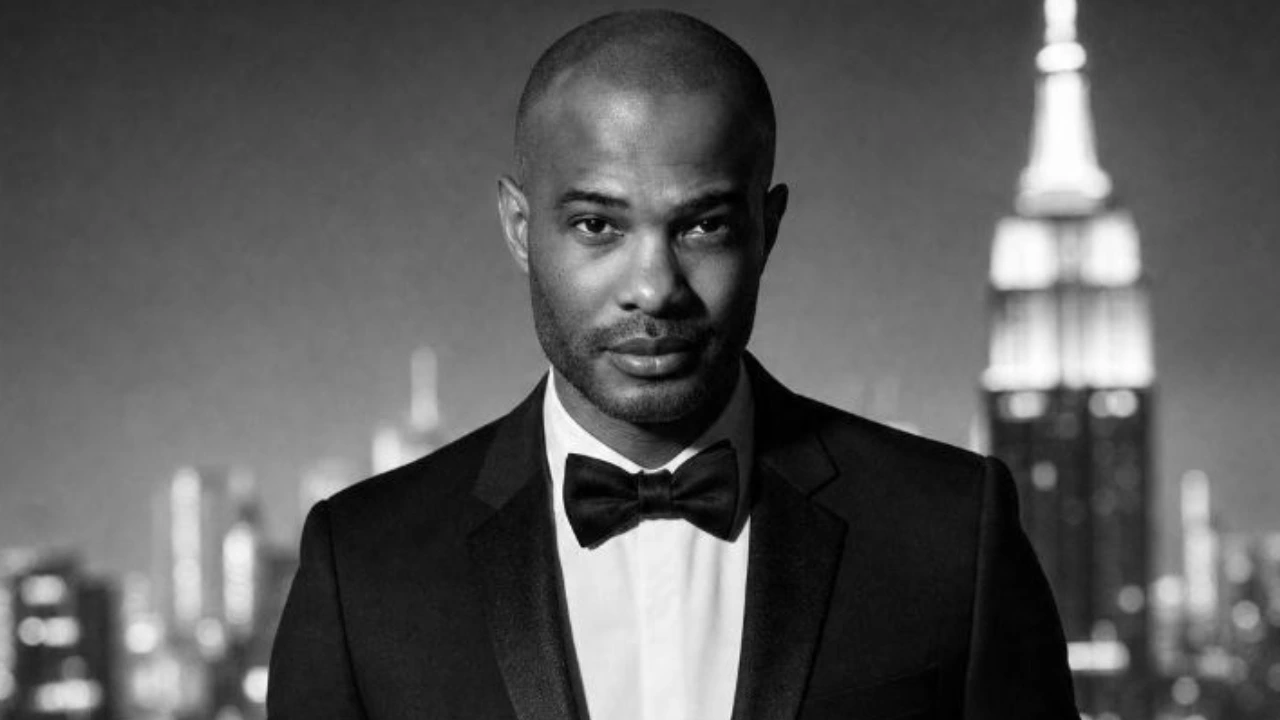


- Jonathan Saunders becomes executive creative director of Kate Spade tomorrow, 26 August, the brand’s first single creative leader in nearly five years.
- The last one, Nicola Glass, left in April 2021. Since 2022 two design directors have shared the role between them.
- Kate Spade sales fell 10% in the most recent quarter, around USD 25 million, to roughly USD 220 million.
- Tapestry is applying the Coach playbook. The question is whether Kate Spade has the same problem Coach had.
Kate Spade gets a creative director again tomorrow. Jonathan Saunders takes up the role of executive creative director on 26 August, reporting to brand president and chief executive Eva Erdmann, with responsibility for product design and visual identity. It is the first time in nearly five years that a single person has held creative authority over the brand. Tapestry is explicit that the intention is to repeat what worked at Coach. Whether that transfers depends on a diagnosis nobody has made publicly, and it is the interesting question here. Here is what the appointment contains and what it is actually being asked to fix.
What Has Been Announced
The details matter because they describe a rebuild rather than a hire.
- Saunders arrives after more than twenty years across Alexander McQueen, Diane von Furstenberg, Calvin Klein, Tiffany & Co. and Pucci, most recently as chief creative officer at H&M-owned & Other Stories, an exit announced only in June.
- Glasgow-born, a Central Saint Martins graduate, relocating to New York to work from the Hudson Yards headquarters.
- He reports to Eva Erdmann, who came from L’Oreal and took the brand in October 2024.
- Allison Badea, also from L’Oreal, joined as chief marketing officer a week before the Saunders announcement.
Two senior beauty executives and a fashion creative director, assembled inside two years. That is a full leadership replacement, not a creative refresh.
What Is Actually Broken
The commercial picture is unambiguous. Sales in the most recent quarter fell around 10%, roughly USD 25 million, to about USD 220 million. Kate Spade was one of the hottest brands in fashion fifteen years ago and has been declining for several years.
But a sales decline is a symptom, and there are at least three different underlying conditions it could indicate:
- A creative problem. The product is no longer desirable and needs a stronger point of view. This is what a creative director fixes.
- A positioning problem. The brand sits in accessible luxury, a segment squeezed from above by discounted designer product and from below by improved mass-market quality. No creative director resolves that alone.
- A distribution problem. Heavy outlet exposure and promotional cadence teach clients to wait for a discount, which is corrosive regardless of how good the collection is.
The appointment addresses the first with confidence and the other two only indirectly. That is worth watching, because the accessible luxury segment has been the most difficult place to stand in fashion for a decade, and the distinction between what a designer can fix and what a business model imposes is set out in what luxury branding actually means.
Does the Coach Playbook Transfer?
Tapestry’s reasoning is straightforward: Coach was in its own slump, Stuart Vevers turned it around over several years, and the same approach should work here. Joanne Crevoiserat, Tapestry’s president and chief executive, told analysts in May that the group sees signs of progress at Kate Spade.
The caution is that Coach’s recovery took a long time and involved more than design. It involved pulling back from discount distribution, rebuilding full-price sell-through and holding a consistent aesthetic across enough seasons for it to register. The creative direction was the visible part of a much less visible operational reset.
A house that changes creative leadership without changing the commercial conditions underneath tends to get a season of attention and then the same trajectory. We set out why in rebranding strategy: a signal of change that is not accompanied by an actual change reads, eventually, as evasion.
What Saunders Actually Brings
The profile is unusually well matched to the brief, which is not always the case with these appointments.
He has worked at both ends. Alexander McQueen and Calvin Klein at one end, & Other Stories at the other. Kate Spade sits between the two, and understanding accessible price points without designing down to them is the specific skill the role requires.
He has done accessories. The Tiffany & Co. period matters here, because Kate Spade is fundamentally a handbag business and a designer whose instincts are purely ready-to-wear tends to solve the wrong problem.
He is described as bringing heritage-driven storytelling. The brand has thirty years of codes, founded in 1993, and a recognisable identity built on colour, wit and optimism. Recovering something the brand already owns is a considerably safer project than inventing a new position, which is the pattern that separates rebrands that hold from those that get reversed, as we found in iconic luxury rebrands.
Bottom Line
Jonathan Saunders starts at Kate Spade tomorrow with a mandate over product design and visual identity, ending nearly five years in which no single person owned the brand’s creative direction. He arrives at a business whose sales fell 10% last quarter to around USD 220 million, alongside a leadership team assembled almost entirely since late 2024. The profile fits: accessories experience, both ends of the price spectrum, and a stated intention to work from thirty years of existing brand codes rather than to invent new ones. The open question is whether Kate Spade’s problem is creative or structural, because the Coach recovery that Tapestry is modelling involved a distribution reset as much as a design one. Expect nothing measurable before autumn 2027. The framework for reading it is in how to run a brand audit.
FAQ
Who is Jonathan Saunders?
A Glasgow-born, Central Saint Martins-trained designer with more than twenty years across Alexander McQueen, Diane von Furstenberg, Calvin Klein, Tiffany & Co. and Pucci. He ran his own label before moving into creative direction roles, and most recently served as chief creative officer at & Other Stories, part of the H&M group.
Why did Kate Spade go five years without a creative director?
Nicola Glass left in April 2021 after three years, and from 2022 the responsibilities were divided between two design directors covering different product categories. Whether that was a deliberate structure or an unfilled vacancy, the effect was the same: no single person held authority over what the brand looked like.
Is Kate Spade a luxury brand?
It sits in accessible luxury, which is a different proposition from luxury proper. The distinction matters commercially: luxury restricts availability to sustain price, while accessible luxury pursues volume at a premium to the mass market. The second position has been the hardest place to stand in fashion for a decade, squeezed from both directions.
How long before a new creative director shows results?
Roughly four quarters before the effect is measurable in sales, because collections are designed months in advance and reach stores in stages. Earlier indicators such as press response and initial sell-through appear sooner but measure attention rather than durable demand.