

At a glance
- The SpaceX IPO created roughly 400 centimillionaires and 4,000 millionaires, with shares unlocking in December 2026.
- Private aviation is seeing a youth movement, with demand spiking in Texas and other technology hubs.
- Embraer delivered 65 aircraft in Q2 2026, its best second quarter in 16 years, including 45 executive jets.
- Global flight activity is running around 4% ahead of 2025 year to date, despite a soft week in late July.
Private aviation has spent three years being driven by post-pandemic converts and established family offices. That era is ending. The single most consequential date on the industry’s 2026 calendar is not an airshow or a certification milestone, it is December, when SpaceX shares unlock for the roughly 400 centimillionaires and 4,000 millionaires the IPO created. A new cohort of buyers, considerably younger than the historic average, is about to gain liquidity at the same moment. Here is what that changes, and what the current data already shows.
The Youth Movement Is Already Visible
You do not need to wait for December to see the shift. Private aviation is already experiencing what operators describe as a youth movement, driven primarily by newly created technology wealth. The SpaceX listing in particular has produced a wave of new millionaires who are increasingly choosing private travel, with sharp increases in demand and activity in Texas and other technology hubs.
That geographic detail matters more than it first appears. Traditional private aviation demand clusters around New York, Florida, Los Angeles, London and Geneva. Texas is a different pattern, with different airports, different FBO infrastructure and different mission profiles. When demand grows somewhere the industry has not built for, the constraint shows up as ground handling and hangar capacity long before it shows up in aircraft availability.
Key figure4,400. The approximate number of new millionaires and centimillionaires created by the SpaceX IPO whose shares unlock in December 2026, opening a fresh pool of potential aircraft buyers.
What the Flight Data Says Right Now
The current activity picture is steady rather than spectacular, which is worth saying clearly before anyone declares a boom.
- In week 29, WingX recorded 77,388 departures worldwide, close to 3% below the same week last year.
- On a rolling four-week basis, private jets logged nearly 314,000 flights, a 2% year-on-year increase.
- Year to date, traffic is running roughly 4% ahead of 2025 levels.
The single-week dip is less meaningful than it looks. Oshkosh drew a surge of business jet traffic in the same period, with the ramp running at close to twelve times its normal occupancy, which distorts both the origin and destination data. What holds is the year-to-date trend, and it is positive.
The Manufacturers Are Already Feeling It
Order and delivery data is the cleanest evidence that this is more than a sentiment story. Embraer delivered 65 aircraft in the second quarter of 2026, its best second quarter in 16 years, of which 45 were executive jets. Business jet and turboprop deliveries rose more broadly across the quarter as utilisation increased through fractional ownership, corporate operators and charter providers.
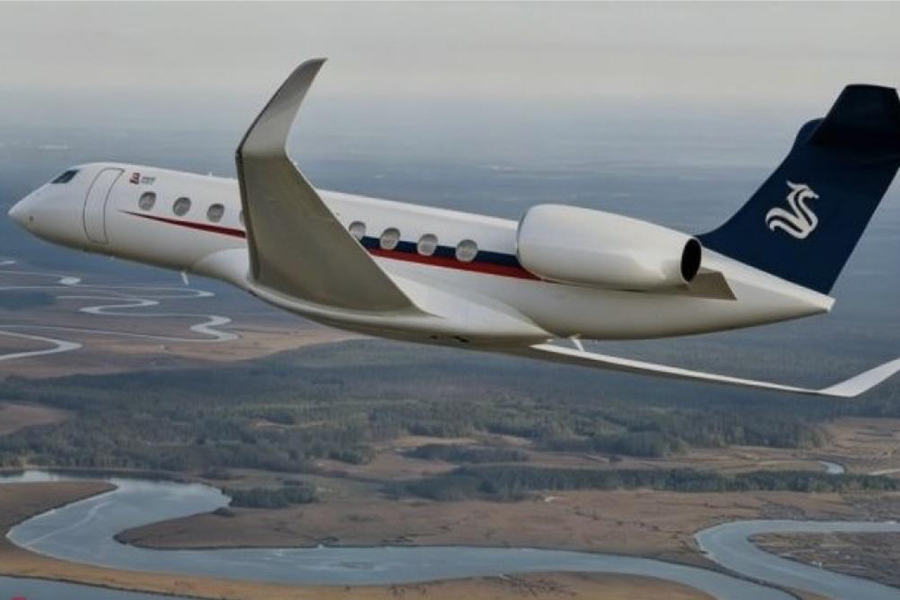
The pre-owned market is tightening in parallel. Gulfstream built the last G650 in 2025, almost none are available for sale, and values are holding close to new. When a benchmark large-cabin aircraft stops depreciating, the economics of ownership change for everyone below it.
Meanwhile the top of the market keeps moving. Dassault’s Falcon 10X made its first flight from Bordeaux on 19 June, opening a flight-test campaign for the largest-cabin business jet in the segment, with entry into service targeted for late 2027. That is the aircraft this new wealth will be shopping for in three years, and we looked at the wider technology race in the next frontier of flight.
Good to knowA lockup expiry is the date after which employees and early investors can sell shares that were restricted at IPO. It converts paper wealth into spendable liquidity, which is why luxury industries watch these dates closely. Not every holder sells, and not every seller buys an aircraft, but the correlation between lockup expiries and high-value purchases is well established.
Why This Buyer Behaves Differently
Three differences are already showing up in how operators describe the new demand, and they matter for anyone selling into it.
- Access before ownership. Younger, first-generation wealth tends to start with charter and fractional programmes rather than whole-aircraft purchase, testing utilisation before committing capital. That favours operators with flexible entry products.
- Digital expectations. This cohort expects to book, price and manage a flight the way it manages everything else. Opacity in charter pricing is a friction it has no patience for, which is precisely the gap platforms have been building to close.
- Mission profile. Technology wealth flies different routes: hub-to-hub, mid-week, frequently, often on shorter sectors than legacy private aviation demand. That pushes value toward light and super-mid aircraft rather than the ultra-long-range fleet.
Put together, this is a demand profile that looks less like a status purchase and more like an infrastructure decision. It is the same logic we described in private jets as a strategic asset, arriving now with a much younger face.
The Caveat Worth Keeping
None of this is guaranteed. The same wealth effect that could lift private aviation is tied to technology equity valuations, and that is a two-way street. The optimistic case for artificial intelligence wealth flowing into luxury comes with an explicit condition attached: it holds as long as the recent chipmaker sell-off and concerns about data-centre financing do not turn into a broader rout.
Paper wealth is not cash, and a lockup expiry into a falling market produces very different behaviour than one into a rising market. December will answer that question, not July. The broader context is that the ultra-high-net-worth population keeps expanding regardless of any single cohort, which is the floor under this whole market.
Key takeawayThe private aviation market is not simply growing, it is changing customer. Younger, technology-generated wealth is entering through charter and fractional access rather than ownership, on shorter routes and from cities the industry has not fully built for. Operators positioned for that profile will capture the December liquidity. The rest will read about it.
Bottom Line
Flight activity is up roughly 4% year to date, Embraer just posted its best second quarter in 16 years, large-cabin pre-owned values are holding near new, and a wave of technology liquidity lands in December. The pieces are aligned for a strong 2027, with one condition: technology valuations need to hold. For buyers, the practical advice is unchanged and slightly urgent. Availability at the top of the pre-owned market is already thin, and it will not improve if 4,400 newly liquid buyers start shopping at once. Our read on Q2 2026 pricing sets out where the pressure points already are.
FAQ
How many new business jets were sold in 2025?
854 according to the General Aviation Manufacturers Association, an increase of 11.8% on the 764 sold globally in 2024. Turboprop sales fell 5.1% to 594 units over the same period.
Which new aircraft are entering the market?
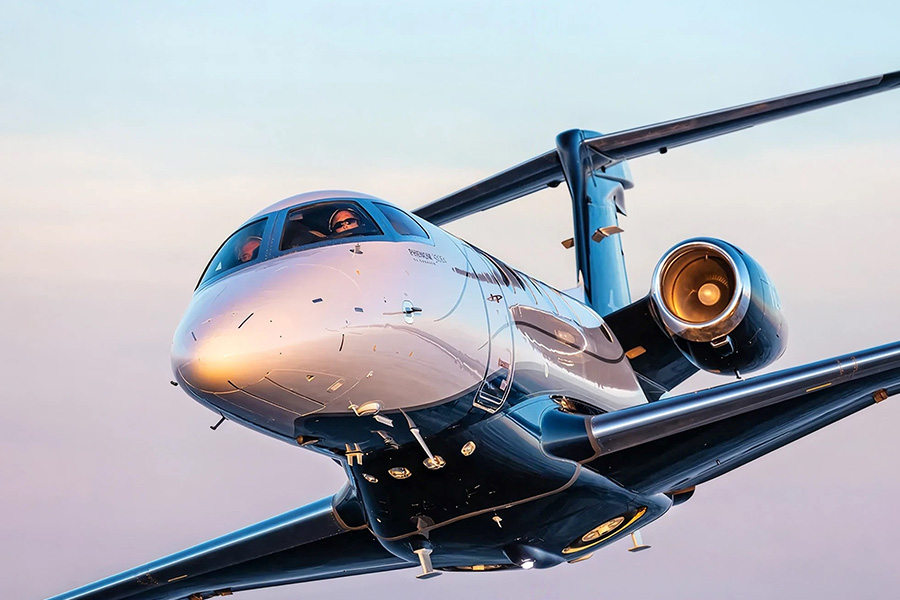
Dassault’s Falcon 10X flew for the first time on 19 June 2026 and is targeted for service entry in late 2027. Embraer has also unveiled the Phenom 300EV, the latest evolution of its light business jet.
Are charter operators expanding capacity?
Yes. Vista, owner of VistaJet and XO, agreed 40 firm orders for the Challenger 3500 with 120 additional options, securing long-term capacity for its member base as premium demand grows.
Could supersonic business jets return?
Possibly. The FAA’s proposed supersonic noise standard could unlock the segment, though questions remain about permitted speeds, operating economics and environmental impact before any aircraft reaches customers.