

A retenir
- The median U.S. luxury sale price rose 4.7% year over year to $1.37M in the three months ending May 31 (Redfin).
- Luxury prices are climbing more than three times faster than non-luxury prices, up just 1.5%.
- The overall U.S. median hit an all-time high of $408,776 in June, partly pulled up by the high end.
- Hottest luxury metros: Tampa, Miami and Las Vegas for prices; San Francisco for sales volume.
Wealthy buyers are now the engine of the American housing market. According to Redfin, the median U.S. luxury home sale price rose 4.7% year over year to $1.37 million in the three months ending May 31, 2026, more than triple the 1.5% gain for non-luxury homes, and their momentum helped push the overall U.S. median to a record $408,776 in June. While ordinary buyers wrestle with mortgage rates and affordability, the top 5% keeps transacting, often in cash. Here is what the data says, where the luxury real estate market in 2026 is hottest, and what it means if you are buying or selling at the high end.
The Numbers: Luxury Is Outrunning the Market Three to One
Redfin defines luxury as the top 5% of each metro’s price range, and every indicator at that tier is accelerating. Pending sales of luxury homes rose 5.2% year over year, the largest gain since December 2024, against 3.6% for the rest of the market. A month earlier, the three months ending April 30 already showed luxury prices up 3.6% to $1.39 million, more than double non-luxury growth, with luxury listings up 2% as high-end owners moved to capture demand.
Key figure$408,776. The all-time-high median U.S. home-sale price in June 2026, up 2.2% year over year, with Redfin citing the strong luxury segment as a key driver of overall price growth.
The divergence is structural. Affluent buyers are less exposed to 6%-plus mortgage rates because many do not need financing at all; Redfin agents report cash-heavy competition in fast-moving markets. First American’s paired-transaction data confirms the split, with luxury homes holding value better than starter and mid-tier properties across the cycle.
Where Prices Are Rising Fastest
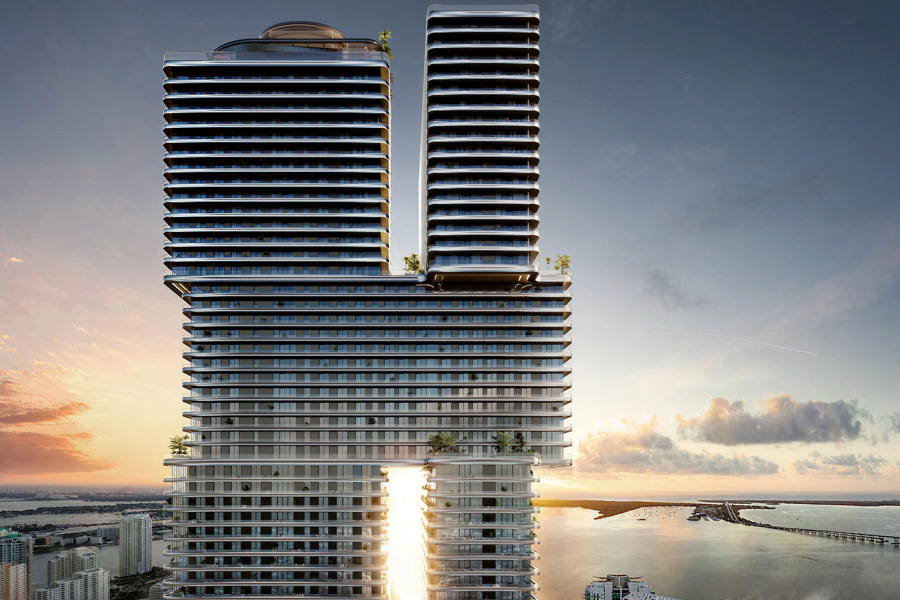
Sun Belt metros dominate the price leaderboard. In the three months ending May 31, luxury prices rose most in Tampa (+15.6%), Miami (+14.2%) and Las Vegas (+13.7%), and fell in only four metros nationwide. Florida’s momentum extends a half-decade of wealth migration into the state, a trend we have tracked as Miami cements itself as the elite second-home hub, with supply now shrinking fast enough to compress the market from both ends.
Volume tells a different story: San Francisco leads the country with luxury pending sales up 45.9% and closed sales up 46.3%, a genuine tech-wealth revival. West Palm Beach and San Francisco both posted roughly 23% gains in overall closed sales in June, the biggest of any major metro, while central New York’s luxury surge shows the appetite reaching well beyond the coasts. San Diego, meanwhile, is capturing spillover from Los Angeles as wealthy buyers choose La Jolla, Del Mar and Rancho Santa Fe over Beverly Hills.
Good to knowRedfin’s luxury tier covers the top 5% of homes per metro; the national luxury median of $1.37M masks huge spreads, from roughly $3.77M in San Diego to eight figures on Billionaires’ Row.
Why the 1% Keeps Buying While Everyone Else Waits
Three forces explain the gap. First, insulation: high-net-worth buyers absorb rates, insurance costs and volatility that sideline typical households. Second, asset rotation: after strong equity and private-market years, real assets remain the preferred store of value, part of the global rush of the ultra-wealthy into luxury property. Third, scarcity: trophy inventory in supply-constrained markets barely grew, so competition concentrates on the few available homes and prices ratchet upward.
The behaviour is increasingly strategic rather than emotional. Off-market deals, entity purchases and cross-border structuring are standard at the top tier, dynamics detailed in our look at the hidden world of off-market luxury listings.
Key takeawayWhen luxury outpaces the broader market three to one, the high end stops being a niche and becomes the market’s price-setter. Appraisals, comps and expectations all drift upward behind it.
Bottom Line
The record is not an accident; it is arithmetic. A cash-rich top 5% transacting into scarce inventory pushed luxury prices up 4.7% and dragged the national median to an all-time high. For sellers, 2026 remains a strong window in Sun Belt and revived tech metros. For buyers, waiting has a rising cost: in this segment, hesitation is the most expensive strategy. Track the broader U.S. market outlook for the one percent as the second half unfolds.
FAQ
What counts as a luxury home in the Redfin data?
Redfin defines luxury homes as those estimated to be in the top 5% of their metro area’s price range, while non-luxury homes fall into the 35th to 65th percentile. All figures cover rolling three-month periods.
Which U.S. cities have the fastest-rising luxury prices in 2026?
Tampa leads with luxury prices up 15.6% year over year, followed by Miami at 14.2% and Las Vegas at 13.7% for the three months ending May 31, 2026, according to Redfin.
Why are luxury prices rising faster than regular home prices?
High-end buyers are less sensitive to mortgage rates and affordability pressures, frequently pay cash, and are competing over unusually tight trophy inventory, so prices at the top 5% climb while the broader market stays sluggish.
Did overall U.S. home prices really hit a record?
Yes. The median U.S. home-sale price reached an all-time high of $408,776 in June 2026, up 2.2% year over year, with the strong luxury segment cited as a key contributor to the growth.