

- Brand architecture is the set of rules deciding which name goes on the product, which name goes on the invoice, and whether the customer is meant to connect the two.
- There are four working models: branded house, house of brands, endorsed brands and hybrid. Luxury is where the trade-offs show up fastest.
- LVMH runs more than 75 Maisons and keeps the parent invisible at the point of sale. Richemont organises by category. Hermes barely has an architecture at all.
- The model is a capital allocation decision before it is a design decision. Kering’s 2025 disposal of its beauty division proves it.
Brand architecture is the system that defines how a company’s brands relate to each other and to the group that owns them. It answers three questions: which name the customer buys, which name the parent puts on the results, and how visible the link between the two should be. Most guides on the subject illustrate it with Apple, Google and Procter & Gamble. Those are fine textbook cases, but they are static. Luxury is the live version, because the houses that own these brands buy them, sell them, rename their divisions and change their creative leadership on a two-year cycle, and every one of those moves is an architecture decision with a price attached. Here are five real portfolios, and what each structure actually costs.
The Four Models, and What Each One Decides
Strip away the jargon and there are four structures. The distinction that matters is not the diagram, it is how much of the parent’s reputation flows into the product, and how much of the product’s failure flows back.
| Model | How it works | Luxury example | The real cost |
|---|---|---|---|
| Branded house | One master name across everything | Hermes | Every category extension risks the core name |
| House of brands | Independent brands, invisible parent | LVMH | No shared equity, so every house pays for its own awareness |
| Endorsed brands | Own identity, visible parent signature | Rare in luxury, common in hospitality | The endorsement is only worth what the parent is worth |
| Hybrid | Different rules for different parts | Richemont | Governance complexity, and internal argument about who gets which rule |
One practical note before the examples. Architecture is not naming and it is not identity design, though it governs both. If you want the layer underneath, the positioning work that determines whether a portfolio has any logic to organise in the first place, start with what luxury branding actually means.
LVMH: A House of Brands That Deliberately Hides Its Parent
LVMH is the purest large-scale house of brands in any industry. The group describes itself as home to more than 75 Maisons across six sectors, spanning wines and spirits, fashion and leather goods, perfumes and cosmetics, watches and jewellery, selective retailing and other activities.
The architecture decision that defines it is one of omission. Walk into a Louis Vuitton store, a Tiffany boutique or a Sephora and the LVMH name appears nowhere on the product, the packaging or the shopfront. The parent exists for investors, for recruitment and for supplier negotiations. It does not exist for the client. That is intentional, and it is expensive: no house borrows credibility from another, so each one carries its own marketing burden.
What the group buys with that cost is insulation. A creative controversy at one house does not travel to the other seventy-four. A soft quarter in champagne is offset by a strong one in beauty retail. The portfolio absorbs shocks precisely because the brands are not connected in the customer’s mind.
More than 75 Maisons, six sectors, one invisible parent. The largest luxury group in the world has built its structure so that its own name almost never reaches the person paying.
Kering: What It Looks Like When a Portfolio Is Deliberately Narrowed
Kering shows the other half of the story, which most brand architecture guides skip entirely: subtraction. The group’s own description lists Gucci, Saint Laurent, Bottega Veneta, Balenciaga, Alexander McQueen, Brioni, Boucheron, Pomellato, Dodo, Qeelin and Ginori 1735, alongside Kering Eyewear.
Then came the reversal. In October 2025, under new chief executive Luca de Meo, Kering agreed to sell its beauty division to L’Oreal for 4 billion euros. The deal included Creed, bought only two years earlier for 3.5 billion euros, plus 50-year exclusive fragrance and beauty licences for Gucci, Bottega Veneta and Balenciaga. De Meo, the first external CEO in the group’s history, told a Capital Markets Day in Florence in April 2026 that a model which had worked for a decade was no longer effective.
Read that as an architecture decision, not a finance one. Kering had extended its houses into a new category under its own control, decided the extension was not earning its cost of capital, and converted it into a licence. The brands stay. The category stays. Only the ownership of the layer changes. We covered the wider reset in our read on Kering’s strategic evolution.
Richemont: Architecture Organised by Category Rather Than by Brand
Richemont is the most instructive hybrid in the sector because it does not organise around brands at all. Its own company snapshot describes 23 Maisons and businesses run across three business areas: Jewellery Maisons, Specialist Watchmakers, and Other, which holds fashion, accessories and the remaining businesses. Sales of 22.4 billion euros and 2,376 monobrand boutiques sit inside that structure.
The consequence is that two Richemont houses of similar size can operate under completely different rules depending on which business area they report into. A jewellery Maison is managed for scale and retail expansion. A specialist watchmaker is managed for craft credibility and controlled volume. That is not inconsistency, it is the point: the architecture follows the economics of the category, not the org chart.
Endorsement is the model luxury almost never uses. Hotels do it constantly, with Courtyard by Marriott or Curio by Hilton, because a traveller booking an unfamiliar property wants a guarantee. A client buying a watch does not want a guarantee from a holding company, they want provenance from the house. The endorsement that reassures in hospitality reads as corporate in luxury, which is why groups keep their names off the dial.
Prada Group and the Case for Staying Small
For more than two decades the Prada Group ran a portfolio that would look underbuilt on any consultant’s slide. Its own group profile lists Prada, Miu Miu, Church’s, Car Shoe, Versace, the historic Pasticceria Marchesi and Luna Rossa, distributed through 843 stores, with around 18,000 employees at the end of 2025 including Versace.
Versace is the interesting part, because it joined the portfolio only in 2025 and it forced a decision the group had avoided for years. Prada could have absorbed it, aligned it, made it rhyme with the house style. It did the opposite, giving Versace its own creative direction rather than folding it into a single group narrative, a choice we examined when Pieter Mulier was appointed in Prada Group’s strategic reset at Versace.
The lesson for anyone managing a smaller portfolio: a house of brands does not require seventy-five brands. It requires that each brand can survive without the others. Five that can is a stronger structure than twenty that cannot.
Hermes: The Case Against Having an Architecture at All
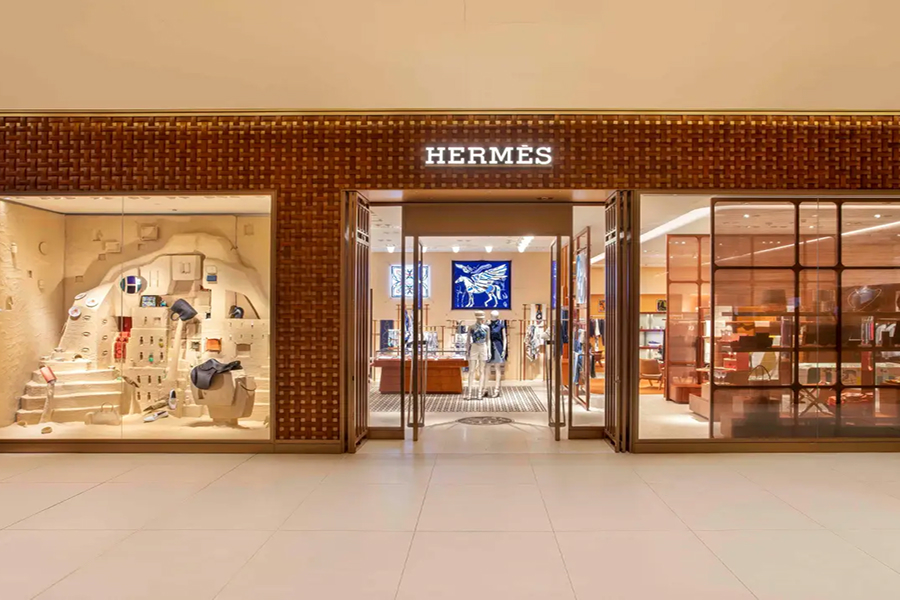
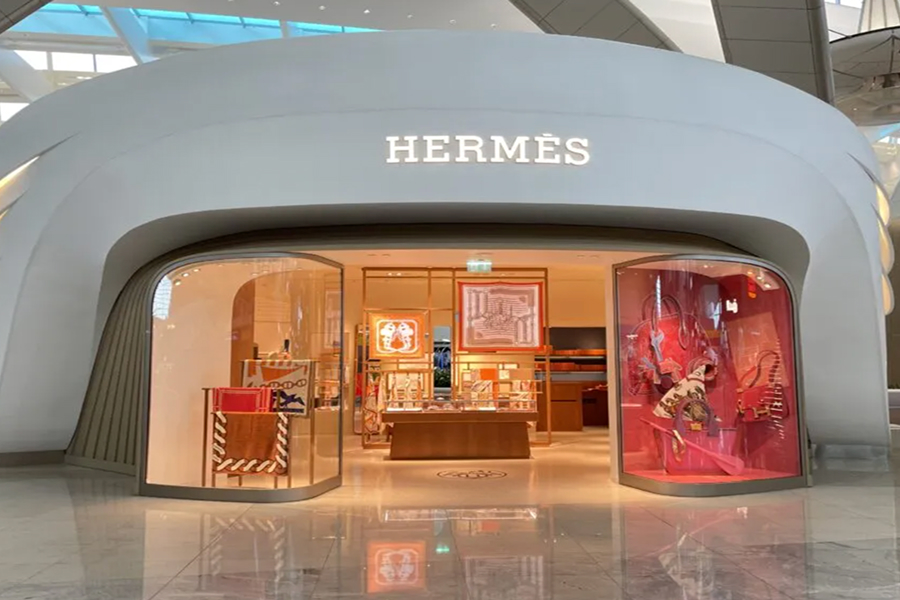
Hermes is the outlier, and the most useful one. The group reported consolidated revenue of 16 billion euros for 2025, up 9% at constant exchange rates, with recurring operating income of 6.6 billion euros, or 41% of sales.
Here is the detail almost nobody notes. Hermes does not report by brand. It reports by metier: leather goods and saddlery, ready-to-wear and accessories, silk and textiles, perfume and beauty, watches, and a residual other products line. The three other houses the group owns, John Lobb, Saint-Louis and Puiforcat, sit inside that residual line alongside production carried out for non-group brands.
In other words, the most profitable house in luxury has organised its structure around crafts rather than brands. There is no portfolio to arbitrate, no internal competition for creative resource, no question about which name goes on the box. It is the strongest available argument that architecture complexity is a cost you take on for a reason, not a sign of maturity.
The right model is the one that matches how your equity is actually distributed. If one name carries the trust, build a branded house. If several names carry it independently, keep them apart and accept the marketing bill. The expensive mistake is running a house of brands with the budget of a branded house.
Four Questions That Decide Your Model
Strip out the theory and the decision comes down to four honest answers.
- Where does the trust sit today? If clients say the parent name when asked what they bought, you have a branded house whether you designed one or not.
- What is the failure radius? Ask what a serious reputational problem at one brand would cost the others. High radius argues for separation.
- Can you fund it? Every independent brand needs its own awareness budget, forever. Count the brands, multiply, and see whether the number is real.
- Who decides when the rules conflict? Architecture fails at the exception, not the rule. If nobody owns the exception, the structure will drift within two years.
Those four questions are the entry point to the wider positioning work set out in our brand strategy framework guide. And once the model is chosen, it has to be written down and enforced, which is the job of rigorous brand guidelines. Architecture without governance is a diagram nobody follows.
Bottom Line
Brand architecture examples are usually taught as a taxonomy, which makes the subject sound tidier than it is. The luxury groups show what it really is: a continuous decision about where equity sits, what it costs to maintain, and what happens when one part of the portfolio fails. LVMH pays for seventy-five separate reputations to buy insulation. Richemont accepts internal inconsistency to match each category’s economics. Prada kept its portfolio deliberately small. Kering removed a whole layer when the numbers stopped working. Hermes never built one. All five are defensible, and none of them are free. If your current structure is the residue of past acquisitions rather than a decision anyone made, the fastest way to see it clearly is to look at how other houses have rebuilt, which we covered in iconic luxury rebrands.
FAQ
What is the difference between brand architecture and brand strategy?
Brand strategy defines what a single brand stands for, who it is for and why it should be believed. Brand architecture operates one level up: it decides how several brands coexist inside one company, which of them carry the parent name, and how equity moves between them. A company with one brand needs a strategy and no architecture. A company with six needs both, and the architecture usually gets neglected until an acquisition forces the question.
Can a company change its brand architecture once it is set?
Yes, and most do, though rarely in one move. The usual triggers are a merger, an acquisition, a divestment or a period where customer research shows people cannot explain how the offerings relate. Changes tend to be executed brand by brand over several years rather than announced as a single restructure, because renaming or unbundling a brand destroys equity if it is done faster than customers can absorb.
Does brand architecture affect search visibility?
More than most teams expect. The model determines which domains you build authority on, whether product lines sit on the parent site or on their own, and how search engines and AI assistants understand the relationship between your names. A house of brands spreads authority across many weak domains. A branded house concentrates it on one strong domain but makes it harder to rank sub-brands independently. Decide the architecture first, then let the site structure follow it.
Do smaller companies need brand architecture?
Any company with more than one named offering already has one, whether or not it was designed. The question is only whether the rules are explicit. For a business with two or three product lines the work takes days rather than months, and it prevents the far more expensive problem later: a portfolio assembled by accident that nobody can explain to a customer in one sentence.