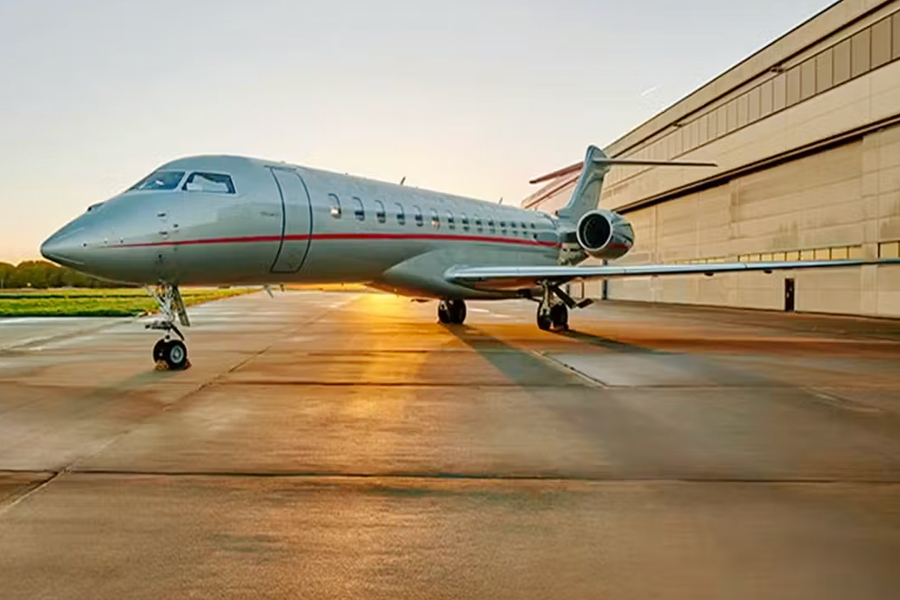


- Solairus Aviation is acquiring Clay Lacy Aviation’s charter and aircraft management businesses, creating a combined fleet of more than 500 private jets.
- Roughly 200 of those are available for charter, making the merged group the sixth-largest US operator by charter hours.
- The deal is expected to close in September, subject to regulatory approval.
- Clay Lacy’s FBO and maintenance businesses are excluded, and that exclusion is the most revealing detail in the transaction.
Two of the largest private aviation operators in the United States are combining. Solairus Aviation has agreed to acquire the charter and aircraft management units of Clay Lacy Aviation, producing a fleet of more than 500 jets of which around 200 will be available for charter, and lifting the merged entity to sixth place among US operators by charter hours. The transaction is expected to close in September pending regulatory clearance. The part worth reading closely is what is not included, because it tells you which side of this business the buyer actually wants. Here is what the deal contains and what it says about where private aviation is heading.
What Is Being Acquired
The transaction is a carve-out rather than a whole-company purchase, and the boundary is deliberate.
- Included: Clay Lacy’s charter operation and its aircraft management business.
- Excluded: the fixed base operations and the maintenance business.
- Result: a combined fleet exceeding 500 aircraft, approximately 200 of them on charter certificates.
- Position: sixth-largest US operator measured by charter hours.
Aircraft management and charter are the asset-light half of private aviation. The operator does not own the aircraft, it flies and maintains them on behalf of owners in exchange for fees, and it sells unused capacity as charter. FBOs and maintenance facilities are the opposite: real estate, hangars, equipment and skilled labour tied to specific airports.
Why Consolidate Now?
Because scale solves the two problems that structurally constrain this business.
Fleet density determines charter economics. A charter operator makes money by minimising empty legs, the repositioning flights flown without passengers. The larger and more geographically spread the fleet, the higher the probability that an aircraft is already near the departure point. Density is not a marginal advantage in this business, it is the margin.
Compliance costs do not scale with size. Safety programmes, regulatory reporting, insurance and training carry substantial fixed costs regardless of how many aircraft they cover. Spreading them across 500 tails rather than 250 changes the cost per aircraft materially.
Both pressures have intensified as demand has broadened. Flight activity has been running ahead of prior-year levels through 2026, and the buyer profile has been shifting toward younger, first-generation wealth that enters through charter and fractional programmes rather than whole-aircraft ownership, a shift we examined in how tech wealth is rewriting the buyer profile.
What the Exclusion Tells You
Leaving out the FBOs and maintenance is the strategic statement in this deal.
FBOs are infrastructure businesses. They generate stable revenue from fuel, handling and hangarage, they are tied to specific airports, and they trade on property-like multiples. Charter and management are service businesses that scale through network effects and carry no real estate.
Buying one without the other is a decision to be a network operator rather than an infrastructure owner. That is a coherent position, and it is also a narrower one: the merged entity will operate aircraft at airports where it does not control the ground infrastructure, which is precisely where capacity constraints have been surfacing as demand grows in cities the industry did not build for.
What It Means for Owners and Charter Clients
Three practical consequences, and they do not all point the same way.
- Better availability for charter clients. A larger, denser fleet improves the odds of finding suitable aircraft at short notice and reduces repositioning costs, which flow through to pricing.
- Consolidation reduces choice for owners. Every merger removes a competitor from the management market. Owners negotiating fees have one fewer alternative, and that dynamic tends to show up in contract terms over subsequent renewal cycles.
- Integration risk is real. Merging two operations means reconciling safety programmes, crew scheduling systems, maintenance tracking and client service standards. In a business where the product is reliability, integration periods are when reliability slips.
Bottom Line
Solairus acquiring Clay Lacy’s charter and management businesses creates a fleet of more than 500 aircraft with around 200 on charter, and makes the combined group the sixth-largest US operator by charter hours, subject to a September close and regulatory approval. The logic is fleet density and fixed-cost absorption, both of which get harder to achieve at smaller scale as demand broadens. The exclusion of the FBOs and maintenance operations is the clearest signal in the transaction: the buyer wants the network, not the infrastructure. For charter clients that should mean better availability. For aircraft owners it means one fewer counterparty at the negotiating table. The demand backdrop sits in our read on Q2 2026 pricing and on private jets as a strategic asset.
FAQ
What is the difference between charter and aircraft management?
Aircraft management is a service provided to someone who already owns a jet, covering crewing, maintenance, compliance and hangarage in exchange for fees. Charter is the sale of flights to clients who do not own an aircraft. Managers often charter out owners’ aircraft during idle periods, which offsets ownership costs and is why the two businesses are usually operated together.
What is an FBO?
A fixed base operator is the ground facility serving private aviation at an airport, providing fuel, passenger handling, hangarage and often maintenance. FBOs are infrastructure assets tied to specific locations, with revenue driven by traffic volume, which makes their economics closer to property than to the service businesses that operate the aircraft.
Why does fleet size matter for a charter operator?
Because it determines how often an aircraft is already positioned near a client’s departure point. Empty repositioning legs are the largest avoidable cost in charter, and a larger, more geographically distributed fleet reduces them. Scale in this business improves margin directly rather than only through purchasing power.
Does consolidation raise prices for charter clients?
Not necessarily in the short term, since improved fleet density lowers repositioning costs and can support competitive pricing. The longer-term concern sits with aircraft owners rather than charter clients, because each merger removes an alternative from the management market and reduces negotiating leverage at contract renewal.