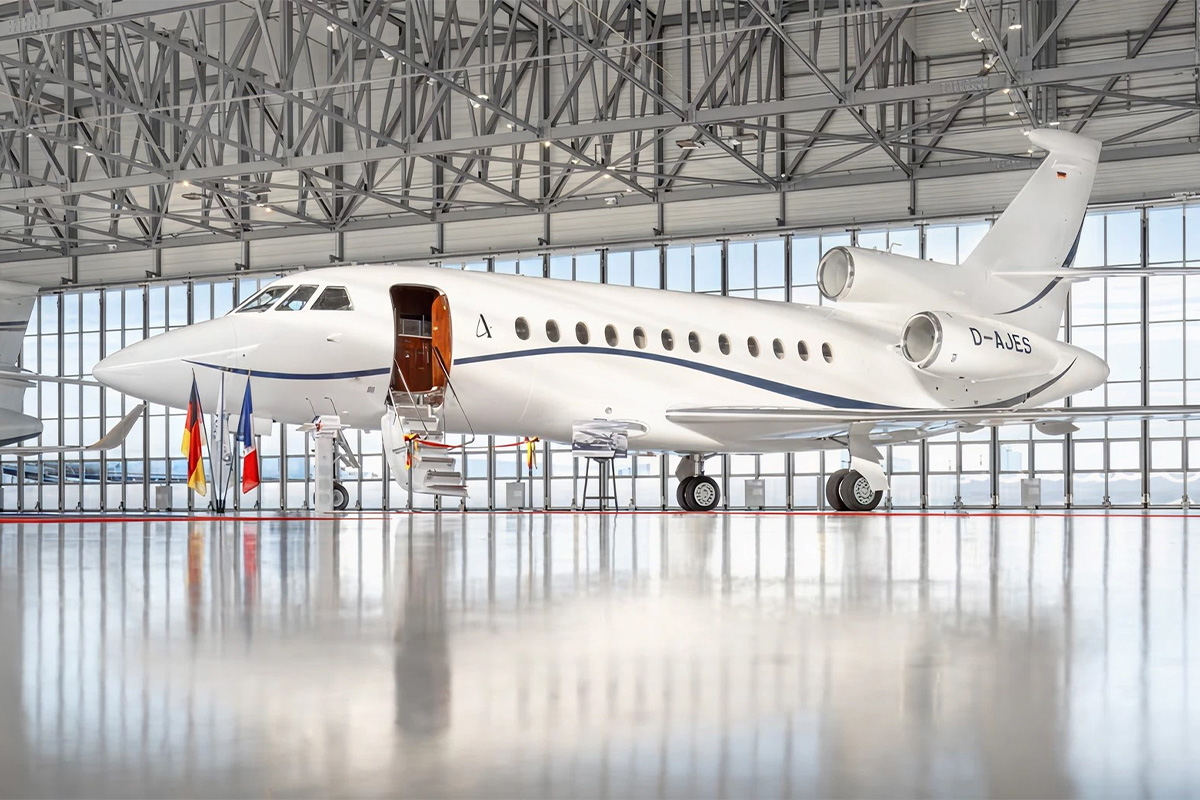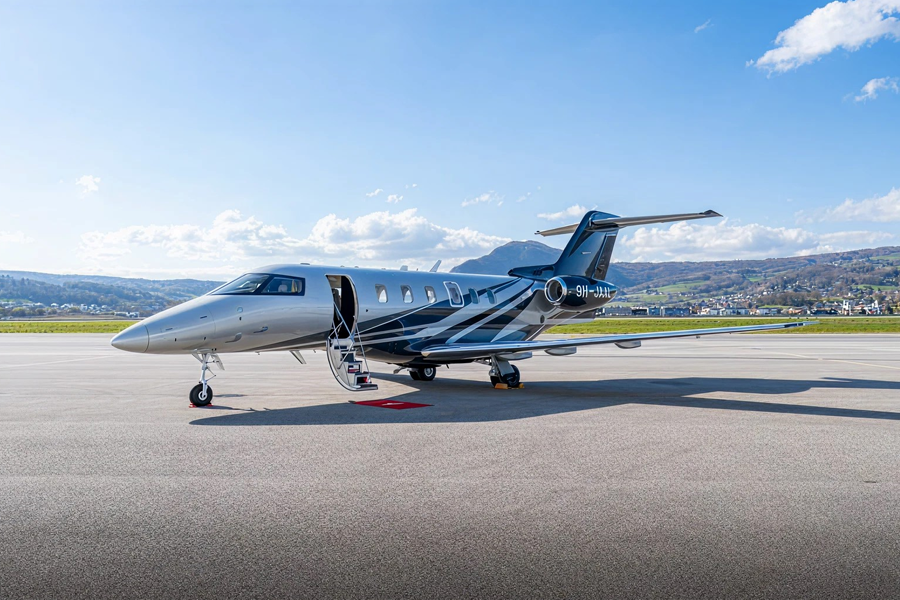


- Wealth created by the artificial intelligence boom is lifting sales of private jets and yachts, and it is arriving with entirely different expectations.
- Toby Edwards, co-chief executive of FlyVictor, says the old standard of champagne on crisp linen has largely gone out of the window with this cohort.
- What they ask for instead is specific water, health-conscious catering and efficiency. They fly privately for discretion, not to impress socially.
- Operators built around display are selling the wrong product to the fastest-growing segment of their market.
The newest generation of private aviation clients does not want the champagne. Reporting on how artificial intelligence wealth is flowing into luxury travel, the Financial Times quotes Toby Edwards, co-chief executive of the charter company FlyVictor, describing a straightforward break with the past: the private aviation golden standard of yesteryear, sipping champagne on crisp linen tablecloths, has largely gone out of the window with this cohort. What has replaced it is stranger and more revealing. Specific types of water. Health-conscious catering. Efficiency. Here is what that means for an industry whose entire service vocabulary was built around visible indulgence.
What Is This Cohort Actually Asking For?
Requests that would have read as eccentric a decade ago and now describe a standard. Edwards points to particular waters and to catering built around nutrition rather than around abundance, and frames the underlying motivation plainly: they are flying privately for efficiency and discretion, not to impress socially.
That sentence does more work than it appears to. Three consequences follow directly.
- The cabin stops being a stage. If nobody is being impressed, the interior is a workspace and a rest space. Materials, light, noise and connectivity matter more than finish theatre.
- Service becomes subtraction. A crew trained to offer more is working against a client who wants less, delivered exactly. Getting an obscure water right is harder than pouring vintage champagne, and it is what registers.
- Time is the product. Efficiency as a stated motive means the value is in the schedule, not the seat. Ground handling, slot access and turnaround now compete with cabin specification for a client’s attention.
Why the Timing Matters
This is not a small cohort arriving quietly. The same reporting notes that Americans in the top twenty per cent of the income distribution, those earning USD 175,000 or more, accounted for nearly sixty per cent of outlays in the first three months of 2026, a category covering consumer spending, charitable donations and debt payments.
Concentration at that level changes who the market is. And in private aviation specifically, the demographic shift has been building for two years, driven by technology equity liquidity events that create wealth suddenly and at a younger age than any previous route. We set out the mechanics of that in how tech wealth is rewriting the buyer profile.
The operators consolidating fastest are the ones positioned for access rather than for ownership, which is the same logic behind the Solairus and Clay Lacy combination we covered in the creation of a 500-jet group.
Why Discretion Has Replaced Display
Because the social function of the private jet has inverted for this group. For a previous generation of clients, flying privately was itself a statement, and the cabin was where the statement was made. For a founder whose wealth arrived through a listing and whose name is already searchable, the jet is the thing that keeps them out of view.
That reframes several service decisions:
- Photographability becomes a liability. Interiors designed to look extraordinary in an image are designed for a purpose this client does not have.
- Anonymity has operational value. Discreet handling, private terminals and predictable routines matter more than recognition on arrival.
- Branding on board recedes. The same logic that governs quiet luxury elsewhere applies at 40,000 feet, and it is examined in quiet luxury branding.
What Operators Should Change
Four adjustments follow from the reporting, and none of them involve spending more on interiors.
Capture preferences as data, not as anecdote. If the product is getting an obscure request exactly right every time, the system that remembers it is the product. Most operators still hold this knowledge in the heads of individual crew.
Rebuild catering around specification rather than around generosity. The old brief was abundance and presentation. The new one is precision, sourcing and dietary compliance, which requires different suppliers.
Sell the schedule. If efficiency is the stated motive, marketing that leads on cabin imagery is answering a question this client did not ask.
Do not abandon the traditional client. The champagne cohort has not disappeared, and serving two service standards simultaneously is a harder operational problem than replacing one with the other.
The Caveat Worth Keeping
This demand is tied to technology equity valuations, and that is a two-way relationship. Wealth created by a boom behaves very differently when the boom pauses, and a service model rebuilt entirely around one cohort carries the same exposure as the cohort itself.
The structural floor underneath is broader than any single wealth event, and the expansion of the global ultra-high-net-worth population is covered in our read on the numbers. But operators making capital decisions on the strength of the current cycle should price the possibility that it slows.
Bottom Line
Artificial intelligence wealth is lifting private jet and yacht sales, and it arrives asking for the opposite of what the industry learned to sell. Specific water, nutritional catering, efficiency and discretion have replaced champagne, linen and display, because this client flies to disappear rather than to be seen. The practical response is not a redesign, it is a systems problem: remembering preferences precisely, sourcing differently, and selling the schedule rather than the seat. Operators still leading with cabin photography are answering a question their fastest-growing segment stopped asking.
FAQ
Why are AI entrepreneurs buying private jets and yachts?
Because rapid wealth creation in the sector has produced a cohort with both the means and an unusually acute need for time efficiency and privacy. Reporting on the trend indicates they treat private aviation as infrastructure supporting a demanding schedule rather than as a status purchase, which is a different motivation from previous generations of buyers.
What does this cohort want on board?
According to FlyVictor’s co-chief executive, specific types of water and health-conscious catering rather than traditional indulgence. The underlying preference is for precision and discretion over display, which makes accurate delivery of small, unglamorous requests more valuable than elaborate service.
Does this mean traditional luxury service is finished in aviation?
No. The established client base has not disappeared, and operators still need to serve it well. What has changed is that a single service standard no longer covers the market, and firms now have to run two quite different models in parallel, which is operationally harder than replacing one with the other.
How exposed is this demand to a technology downturn?
Considerably. Wealth generated by equity valuations behaves differently when those valuations fall, and spending driven by recent liquidity is more cyclical than inherited or operating-business wealth. Operators expanding capacity on the strength of this cohort should treat the assumption as a variable rather than as a floor.