

Branding vs Marketing: What Every Luxury Leader Must Understand in 2026
Why does a Hermès Birkin maintain its allure without a single traditional ad campaign, while other brands pour millions into marketing and still fail to create genuine desire? The answer lies in one of the most misunderstood distinctions in business: the difference between branding and marketing.

In 2026, as agentic AI reshapes how consumers discover products and trust becomes the ultimate currency for premium positioning, understanding where branding ends and marketing begins is not an academic exercise. It is the strategic advantage that separates luxury leaders from the forgettable. The brands that master both disciplines, and the synergy between them, are the ones that endure across generations. This reality has been shaped by centuries of evolution, as we explore in our analysis of the history of luxury brands.
This article breaks down the core differences between branding and marketing strategy, explains how both work together in a luxury context, and provides a clear framework to build brand equity while driving measurable growth. Whether you are a UHNW entrepreneur launching a new maison or a CMO refining a heritage brand’s positioning, these insights are designed for you.
What Is Branding? The Foundation of Luxury Identity
Branding defines who you are. It is the strategic process of shaping perception: your brand identity, brand personality, core values, visual identity, brand promise, and the emotional connection you forge with your audience. While products can be replicated and campaigns forgotten, a brand, when built with intention, becomes indelible.
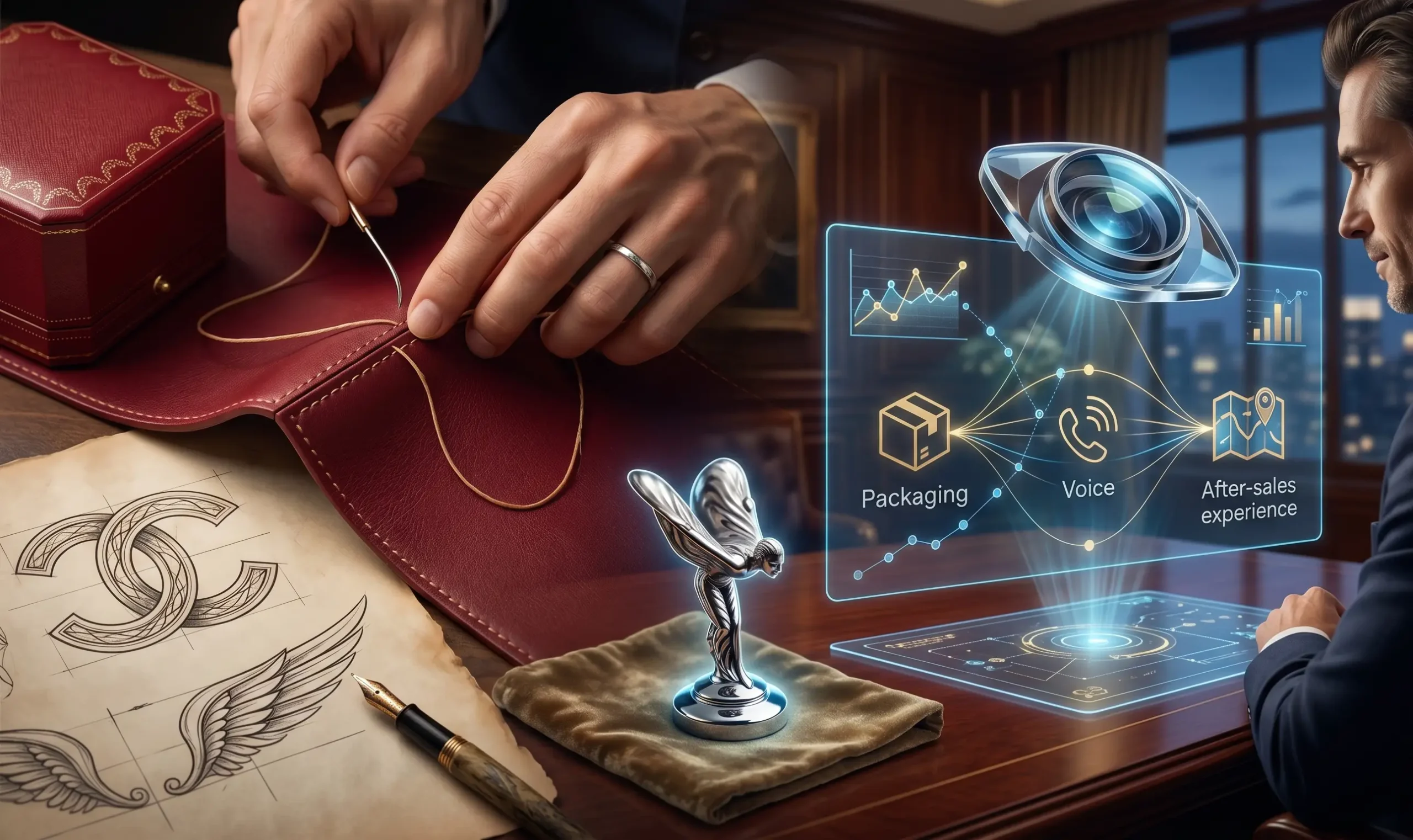
In luxury, branding is everything that Chanel’s interlocking Cs, Rolls-Royce’s Spirit of Ecstasy, or Cartier’s iconic red box represent before a single word of marketing copy is written. It is heritage, craftsmanship, and aspiration codified into an identity that transcends any individual product or season. To understand how these symbols acquired their power, explore our deep dive into the origins of luxury through the ages.
Brand identity extends far beyond a logo. It encompasses your tone of voice, your brand communication style, and comprehensive brand guidelines that govern every touchpoint. Your core values and brand personality form the strategic DNA of a luxury brand identity, the invisible architecture upon which all expressions are built. In luxury, consistency across every detail, from packaging to after-sales experience, is what commands premium pricing and cultivates devotion.
The brand promise is the unspoken contract between a luxury house and its clientele: an assurance of excellence, exclusivity, and meaning that justifies the premium. And in 2026, this promise is scrutinized not only by human perception but by agentic AI systems that evaluate brand coherence across the entire digital ecosystem. Consistency is no longer just an aesthetic principle. It is a ranking factor.
What Is Marketing? The Engine That Drives Growth
Marketing is how you communicate your brand to the world and move people to act. It encompasses the marketing strategies, campaigns, channels, and tools you deploy to reach your target audience and drive measurable outcomes, from awareness to consideration to conversion.
For luxury brands, marketing is curated, selective, and experiential. It is never mass-market saturation. Think Dior’s cinematic campaigns that feel like short films, Prada’s art collaborations with the world’s most provocative creatives, or Patek Philippe’s generational storytelling that has made their iconic tagline one of the most enduring in advertising history.
The modern luxury marketing toolkit includes content marketing, digital marketing, social media marketing, email marketing, SEO, and public relations. Each channel serves a specific purpose within a broader branding and marketing strategy. Marketing campaigns are tactical, time-bound, audience-specific, and results-driven. They are the operational arm that puts the brand’s vision into motion.
In luxury, the target audience is defined by psychographics over demographics. It is not about income brackets alone but about values, aspirations, and cultural fluency. Marketing puts the brand to work, transforming identity into brand awareness, consideration, and ultimately, desire. A critical insight for 2026: branded search campaigns now convert at two to five times the rate of non-branded queries, proving that strong branding directly fuels marketing ROI.
Branding vs Marketing: The Key Differences Explained
Dimension | Branding | Marketing |
Purpose | Defines identity and shapes perception | Promotes products and services, drives action |
Time Horizon | Long-term (years, decades) | Short-to-medium term (campaign cycles) |
Focus | Why you exist and what you stand for | How you reach people and persuade them |
Nature | Strategic, consistent, emotional | Tactical, fluid, data-driven |
Output | Identity, guidelines, voice, values | Campaigns, ads, content, emails, SEO |
Measures | Brand equity, recognition, loyalty, NPS | Conversions, CTR, traffic, ROI, engagement |
Luxury Example | Hermès’ heritage of craftsmanship | Dior’s seasonal celebrity campaign |
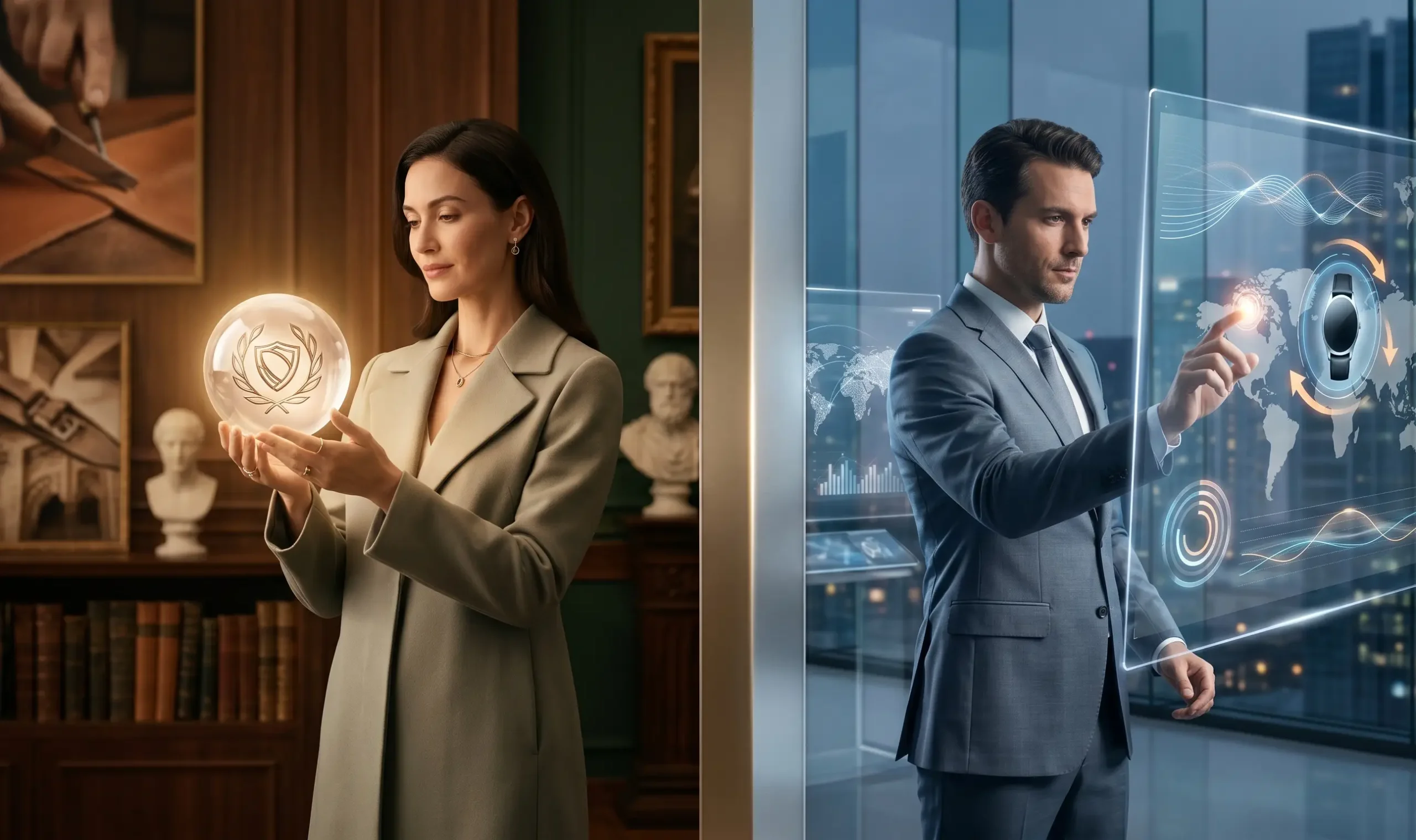
Branding shapes perception. Marketing promotes identity. One builds trust, credibility, and desire over time. The other captures attention and converts that desire into action. In luxury, this distinction is amplified, because the brand IS the product. A Chanel jacket is not merely outerwear; it is membership in a narrative. A Rolex is not just a timepiece; it is a declaration. Understanding this difference between branding and marketing is what allows luxury houses to protect that intangible magic while still driving commercial performance.
How Branding and Marketing Work Together in Luxury
Branding builds the foundation. Marketing puts it to work. Neither succeeds in isolation. A brilliant marketing campaign cannot rescue a hollow brand, and the most refined brand identity means nothing if no one encounters it. In the luxury sector, the interplay between these two disciplines is especially precise, and especially powerful when executed with intention.
The Three-Step Luxury Framework
- Brand Strategy First. Define your identity, positioning, personality, and promise. Clarify what your brand stands for, who it serves, and why it matters. Every subsequent decision, from product design to retail experience, flows from this foundation.
- Marketing Strategy Follows. Develop campaigns, content, and channel strategies that are rigorously aligned with the brand. In luxury, this means selecting platforms and moments that reinforce exclusivity rather than dilute it. Every piece of content marketing or digital marketing must feel like an extension of the brand world.
- The Feedback Loop. Marketing data, including customer feedback, engagement patterns, and sentiment analysis, informs the evolution of the brand strategy. This loop ensures the brand stays culturally relevant without sacrificing its identity.
Consider the Prada Group as a case in point. Prada’s brand identity, rooted in intellectual fashion, art, and architecture, drives every marketing decision, from its collaborations with Rem Koolhaas to its investment in cinema. The result: €5.72 billion in revenue in 2025, with 9% year-over-year growth. For a deeper exploration of how Prada shapes the luxury landscape, read our analysis of luxury fashion brands redefining the industry.
Research indicates that 93% of brands tightly integrating brand strategy with marketing execution see stronger long-term performance. In the age of AI-generated content, where homogeneity is the default, brand coherence is the ultimate moat.
Why Branding Is Essential for Luxury Businesses
In luxury, the brand IS the competitive moat. Without strong branding, businesses cannot command premium pricing, inspire customer loyalty, or build generational equity.
Brand awareness and brand recognition are the prerequisites for luxury consideration. No one walks into a Cartier boutique by accident. They arrive because decades of consistent branding have made the name synonymous with elegance and desire. Customer loyalty in luxury is fueled by emotional connection: the feeling of belonging to something exceptional, the quiet confidence that comes from choosing a brand whose values mirror your own.
Brand equity is what allows Chanel, Rolex, and Louis Vuitton to justify premium pricing through decades of consistent identity, a phenomenon explored in our feature on the luxury brand watch redefining horology. Trust and credibility matter more than ever: 88% of consumers now say trust is a deciding factor in purchase decisions, according to Salesforce research.
In saturated markets, especially as luxury expands digitally, branding is the force that differentiates the extraordinary from the merely expensive. The same principle applies to luxury hospitality, where brand identity transforms a hotel stay into a defining experience.
Building a luxury brand that commands authority? Discover how Charley Signature helps elite businesses define their identity and dominate their market.
How to Build a Strong Brand: A Framework for Luxury
Building a strong brand in luxury requires a disciplined, intentional process. Below is a five-step framework designed for brand owners, CMOs, and creative directors who refuse to leave identity to chance.
1. Define Your Brand DNA
Mission, vision, core values, and unique identity. This is where everything begins. What does your brand stand for beyond the product? For Patek Philippe, it is the philosophy of generational legacy. For Hermès, it is the celebration of artisanal savoir-faire. Define your DNA before you design a single touchpoint.
2. Craft Your Visual Identity
Logo, color palette, typography, imagery. In luxury, every visual cue must communicate exclusivity and intentionality. Your visual identity is the first language your brand speaks. Before a word is read, the aesthetic must convey authority.
3. Develop Brand Voice and Personality
How does your brand speak? What tone, vocabulary, and storytelling approach defines your brand communication? A luxury brand personality is confident without being arrogant, refined without being inaccessible. It invites rather than sells.
4. Establish Brand Guidelines
A comprehensive brand book ensures consistency across every touchpoint: website, packaging, customer service, retail environment, social media. In luxury, inconsistency is the fastest path to erosion of brand equity.
5. Align Brand with Business Strategy
Connect brand strategy to product development, pricing, distribution, and marketing. The brand must inform every business decision, not exist as a veneer applied after the fact. When brand and business strategy are unified, the result is a house that commands both desire and commercial power.
How to Measure Branding and Marketing Success
What gets measured gets managed. But in luxury, not everything that matters can be quantified in a dashboard. Effective brand management requires tracking both tangible and intangible indicators.
Branding Metrics | Marketing Metrics |
Brand recognition (unaided and aided) | Website traffic and organic rankings |
Net Promoter Score (NPS) | Conversion rates (leads, sales) |
Brand equity indices | Click-through rates (CTR) |
Customer loyalty and retention | Engagement rates (social, email) |
Brand sentiment analysis | Cost per acquisition (CPA) |
Share of voice in luxury conversations | Return on ad spend (ROAS) |
In luxury, intangible metrics carry particular weight. The LYST Index, which measures online desirability across millions of searches and social signals, has become a definitive barometer of brand performance in the premium sector. A brand that is widely desired but selectively accessible commands the highest brand equity. That is the ultimate luxury equation. Understanding how this dynamic evolved over centuries is key, and our exploration of the evolution of luxury offers essential context.
Ready to build a luxury brand that defines your market? Charley Signature crafts brand identities for the world’s most ambitious businesses. Discover the difference.
FAQ: Branding vs Marketing
What is the difference between branding and marketing?
Branding defines your identity: who you are, what you stand for, how people perceive you. Marketing communicates that identity through campaigns, content, and channels to drive business outcomes. Branding builds meaning. Marketing distributes it.
Does branding or marketing come first?
Branding always comes first. You must define your identity, core values, and positioning before investing in marketing. Without branding, marketing lacks direction and emotional resonance. In luxury, direction is everything.
Can a luxury business succeed without branding?
Short-term sales are possible through marketing alone. But without strong branding, luxury businesses cannot command premium pricing, build customer loyalty, or create the aspirational identity that defines true luxury. The product becomes a commodity, and that is the opposite of what luxury represents.
What role does branding play in digital marketing?
Branding shapes every digital touchpoint, from social media marketing tone to email marketing design. Strong branding ensures consistency across the digital ecosystem, which AI-driven search engines now evaluate to determine visibility and credibility. In 2026, brand coherence is both a perception play and an algorithmic advantage.
How do luxury brands measure branding success?
Through brand recognition (unaided and aided awareness), Net Promoter Score, brand equity indices, customer loyalty rates, sentiment analysis, and intangible metrics like the LYST Index. The most sophisticated luxury houses also track share of voice in cultural conversations and media placements.
Share Now
LATEST
POPULAR