

- Heritage brand strategy is the discipline of turning a company’s past into a present commercial asset. Age alone does not do it.
- There is a hard distinction between a heritage brand and a brand with heritage. Many old companies are the second and will never be the first.
- Heritage rests on five components: track record, longevity, core values, symbols and stewardship. Only the last one is a choice made daily.
- The failure mode is not forgetting the past. It is preserving the wrong parts of it.
Heritage brand strategy is the deliberate selection, curation and activation of a company’s history to support its position today. That definition contains the whole argument, because it excludes most of what old companies actually do with their past. Every business has a history. Very few have heritage. The difference is intent: heritage exists only where a house decides which parts of its story to carry forward, which to retire, and how the resulting narrative earns its keep commercially. Houses that have crossed a hundred years offer the clearest evidence of how that works, and of what happens when it is done badly. Here is what they actually do.
Heritage Brands and Brands With Heritage Are Not the Same Thing
This is the distinction most guides skip, and it is the one that determines whether any of the rest applies to you.
A heritage brand uses its past as a primary lever of brand management. A brand with heritage is simply old. L’Oreal was founded before Chanel, yet it is not treated as a heritage brand, because it positions on research excellence, constant evolution and technology rather than on lineage. That is a legitimate strategic choice, not an oversight.
Hugo Boss illustrates the harder version. Founded in 1924, the company saw a significant boost during the Second World War because it supplied uniforms to the Nazi government. That period is understandably absent from its brand communication. The house has longevity, and it has history, but a portion of that history cannot be activated. Heritage that cannot be told is not a marketing asset.
The reverse also holds. Shang Xia, the Chinese house founded by Hermes in 2008, can be discussed in heritage terms despite its youth, because it was constructed around craft lineage from the outset. Heritage is a positioning, not a birth certificate.
1755. The founding year of Vacheron Constantin, the oldest watch manufacturer in continuous operation. Two hundred and seventy years of uninterrupted production is a claim no competitor can acquire, replicate or outspend.
The Five Components of Brand Heritage
Academic work on corporate heritage, principally by Urde, Greyser and Balmer, breaks the concept into components that are useful precisely because they can be audited. A practical version:
- Track record. Demonstrable delivery on a promise over time. Not survival, performance.
- Longevity. Perceived endurance in the market, which is not the same as recorded age.
- Core values. Principles that have actually governed decisions rather than principles written down later.
- Symbols. Visual and material anchors: a monogram, a lock, a stitch, a shape, a colour.
- Stewardship. Active preservation and evolution by the people currently running the house.
Four of those five are inherited. Only stewardship is a decision made this quarter, and it is where heritage strategies live or die. A house can hold the other four and still lose its heritage in a decade of careless stewardship, which is what makes this the component worth budgeting for.
What Centenarian Houses Actually Do Differently
Look at the houses that have crossed a century and are still growing, and the same three behaviours recur.
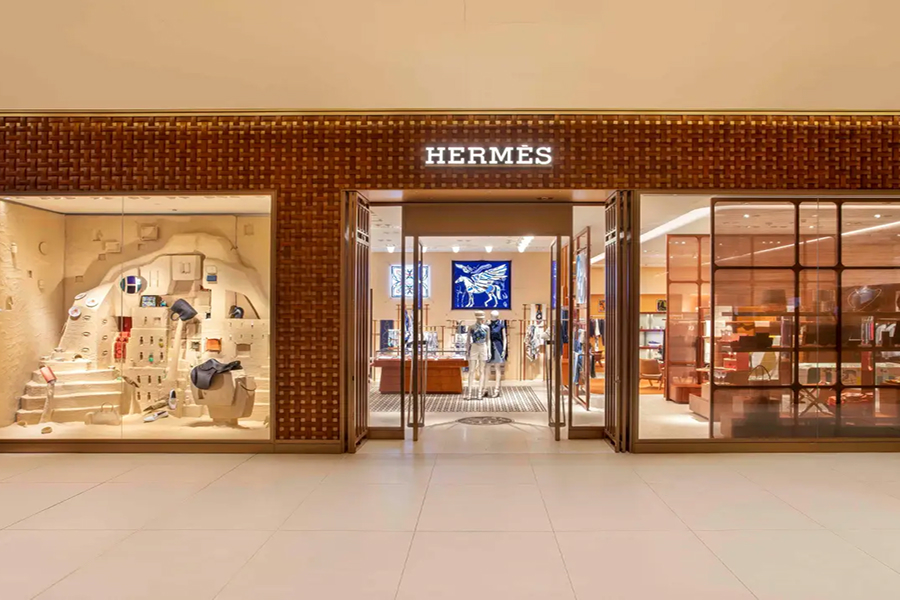
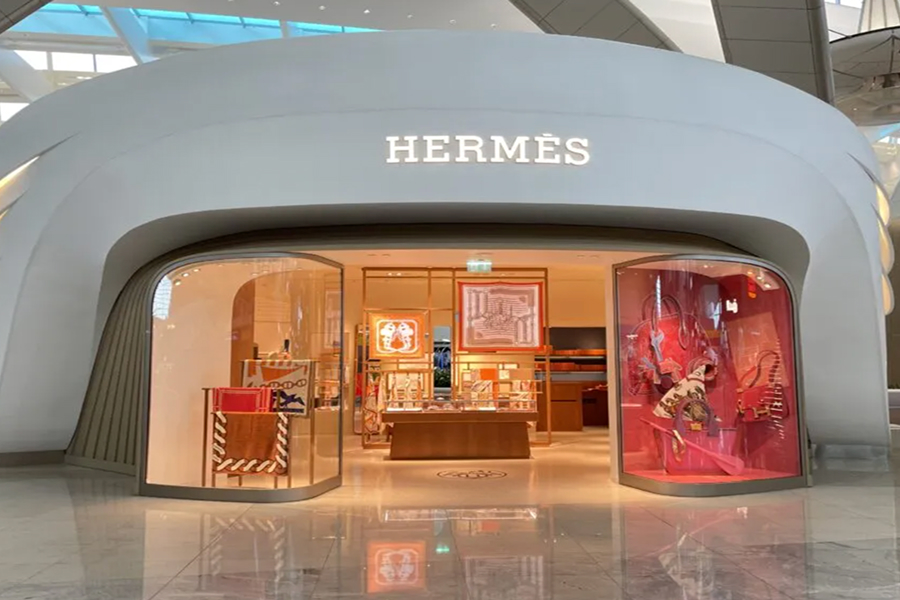
They organise around craft rather than around brand. Hermes, founded in 1837, reports its results by metier: leather goods and saddlery, ready-to-wear, silk and textiles, watches, perfume and beauty. The structure of the company mirrors the structure of the workshop. In 2025 the group posted revenue of 16 billion euros with recurring operating income of 6.6 billion, or 41% of sales, which is the strongest margin in the sector. That discipline is not decoration, and we examined how it operates in Hermes and creative discipline.
They anniversary their symbols, not themselves. When Louis Vuitton marked 130 years of the Monogram, the celebration was built around a pattern rather than around a founding date. Symbols can be reissued, reinterpreted and collaborated on. A founding year can only be repeated. Our coverage of that programme sits in the Monogram at 130.
They change slowly and visibly. Cartier, founded in Paris in 1847, has kept the Tank, the Love bracelet and the Panthere in continuous circulation for decades while altering them constantly at the margins. The client sees continuity. The archive shows evolution. Both are true.
The academic literature separates two approaches that are often confused in practice. Brand revitalisation modernises an identity while keeping the brand alive in the present. Retro branding deliberately reinforces association with the past, often using old logos, slogans or imagery. Heritage strategy is closer to the first. Retro branding borrows the aesthetics of age without the obligations of it, which is why it works quickly and rarely lasts.
The Failure Mode: Preserving the Wrong Things
Longevity guarantees nothing. Debenhams was founded in 1778, made it 240 years, and still failed, having not reimagined its department store experience or built a credible e-commerce presence in time. Age gave it recognition and gave it nothing else.
The pattern in heritage failures is consistent and worth naming, because it does not look like neglect from the inside.
- Preserving formats instead of values. The department store, the printed catalogue and the seasonal show are formats. Service, craft and discretion are values. Houses that defend the first while losing the second die respectably.
- Treating the archive as a museum. An archive nobody reissues is a cost centre. An archive that feeds current product is a competitive moat.
- Confusing consistency with immobility. Clients accept a house evolving. They do not accept it contradicting itself. Those are different failures, and brands routinely avoid the second by committing the first.
Heritage is not what a house has, it is what a house maintains. Four of the five components are inherited and cannot be improved. The fifth, stewardship, is entirely a present-tense decision, and it is the only one that explains why two houses founded in the same decade end up a century later in completely different positions.
How to Build Heritage You Do Not Yet Have
Younger brands are not excluded from this, but the honest version of the advice is uncomfortable: you cannot manufacture longevity, so build the components that are available now and let time do the rest.
- Document decisions, not just products. The reason old houses have rich archives is that someone kept the correspondence. Most brands under twenty years old cannot explain why they made their most important choices.
- Fix your symbols early and stop moving them. Equity accrues to marks that stay still. A visual identity revised every three years accumulates nothing, which is the same failure we described in our study of luxury rebrands.
- Choose a craft claim you can still defend in thirty years. Materials and techniques age well. Technology claims do not.
- Write the stewardship rules down. Heritage survives management turnover only when it is codified, which is the practical function of serious brand guidelines.
The restraint required here is closer to quiet luxury branding than to conventional brand building, and it runs against every incentive a marketing team faces in a given quarter.
Bottom Line
Heritage brand strategy is a stewardship discipline dressed up as a storytelling one. The houses that have survived a century did not do it by talking about their age. They did it by keeping their symbols still, feeding their archive into current product, organising around craft rather than around campaigns, and refusing to preserve formats that had stopped serving the values underneath them. For anyone assessing their own position, the useful first question is not how old the brand is. It is whether the past is doing commercial work today, and if the answer is no, the fix belongs in positioning rather than in communication. Start with what luxury branding actually means.
FAQ
How old does a brand have to be to have heritage?
There is no threshold, and age is the weakest of the five components. What matters is whether the past is legible, defensible and actively used. A house founded in 2008 that was built around craft lineage can operate as a heritage brand, while a company founded in 1900 that positions purely on innovation is not one and does not need to be.
Can heritage become a liability?
Yes, in two ways. A history containing episodes the brand cannot discuss limits how much of the past can be activated. And a heritage position can signal irrelevance to younger buyers if the house has no contemporary proof point to sit alongside the archive. The remedy is usually current product rather than new messaging.
What is the difference between heritage marketing and nostalgia marketing?
Heritage draws on the brand’s own verifiable past and makes claims it can substantiate. Nostalgia draws on a period’s general emotional associations, which any brand can borrow whether or not it was there. Nostalgia campaigns can perform well in the short term but build no defensible asset, because a competitor can run the same campaign next season.
Who should own heritage inside a company?
Practically, it needs a named custodian with access to both the archive and the product calendar. When heritage sits only with communications, it becomes a content theme. When it sits with product and design, it shapes what the house actually makes, which is the only version that compounds.